
Best Time of Year to Paint Exterior in Phoenix
Paint in 115° summer or wait for October? The real paint-film temperature limits and monsoon timing for Phoenix exteriors.
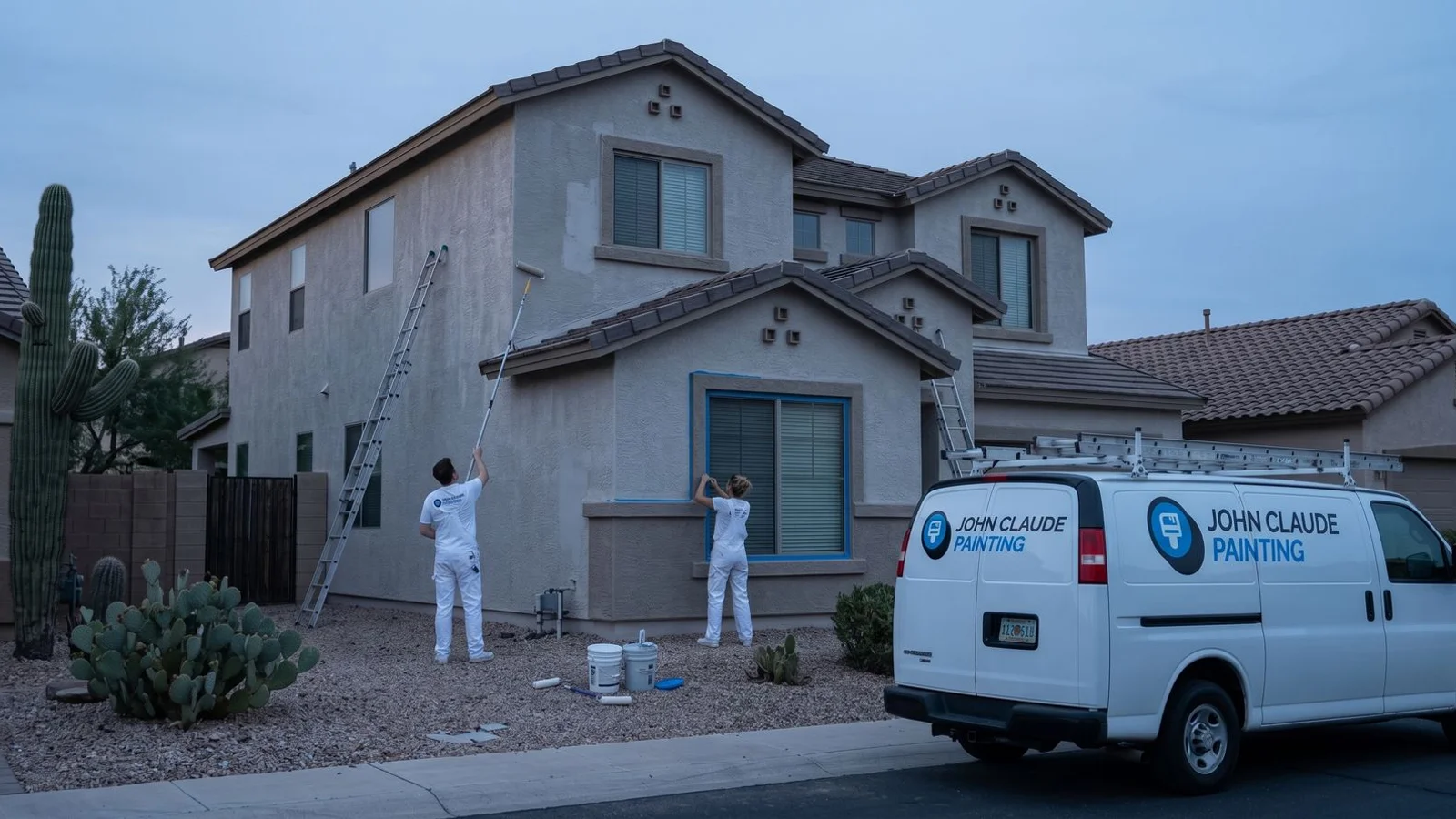
We regularly see homeowners delay their projects trying to guess the best time to paint exterior Phoenix properties. Waiting for nice weather seems logical, but modern paint chemistry actually gives you a much wider scheduling window.
Our team at John Claude Painting relies on strict temperature parameters to ensure superior craftsmanship year-round. This data-driven approach separates a paint job that lasts fifteen years from one that fails in three.
We will break down exactly when to schedule your exterior project based on surface heat and monsoon humidity.
You can then make a clear, informed decision for your property.
Ideal: October Through April
October through April provides the absolute best window for exterior painting in Phoenix. The daytime temperatures sit right in the sweet spot for maximum adhesion.
We typically book the majority of our exterior jobs during these months. Products cure properly, the paint film lays down uniformly, and nothing rushes the crew on the job site.
Here is why this season is the local favorite for exterior work:
- Ideal air temperatures: Daytime highs between 60°F and 90°F allow the acrylic binders to form a tough, flexible shield.
- Perfect humidity levels: The Phoenix Valley typically sees a very low 15% to 30% relative humidity during the winter and early spring.
- Safe overnight curing: Lows consistently stay above the minimum film-formation temperature of 35°F for most quality products.
- Predictable scheduling: Reliable dry windows make it easiest for crews to finish without weather delays.
Our experience shows that stucco and wood surfaces maintain perfect temperatures for paint flow during these cooler months. You get maximum protection against UV damage when the paint cures slowly.
We highly recommend booking early because contractor schedules fill up fast for spring projects.
Marginal: May + September
May and September are completely workable months for painting, but they require highly strategic scheduling. We start these jobs much earlier in the day to beat the intense Arizona sun.
Specialized infrared thermometers help measure surface temperatures before any product touches the wall. Our crews know the stucco on the south and west elevations absorbs sun quickly, often getting 20 to 40 degrees hotter than the ambient air by noon.
Strict Application Guidelines for Heat
To manage these transitional months successfully, follow these specific protocols:
- Shift to early-morning starts: Crews must begin at 6:00 AM to finish heavy-sun walls before 10:00 AM.
- Chase the shade: A popular industry technique involves moving around the house to stay out of direct sunlight as the day progresses.
- Avoid mid-day application: Never paint the south and west elevations when the sun hits them directly.
- Adjust application methods: Spray products can flash dry too fast on warm walls, so you should dial back to brush-and-roll techniques on hot days.
We adjust our strategy daily during May and September to ensure the paint never dries before it can bond properly to the house. Flash drying creates poor adhesion and uneven coverage that will fail prematurely.
Our priority is always getting a smooth, durable finish regardless of the rising heat.
Summer (June-August): Doable With Caveats
Summer in Phoenix is definitely not off-limits for painting, but it absolutely requires specialized heat-rated products and pre-dawn scheduling. The best time to paint exterior Phoenix properties during the summer is strictly between 5:00 AM and 10:00 AM.
We routinely handle summer projects by heavily restricting our working hours. Surface temperature matters far more than the air temperature during these blistering months.
A 90°F morning air temperature easily translates to a 110°F wall, because stucco runs at least 20 degrees hotter than the surrounding air. Most standard exterior paints have a strict 50°F to 90°F surface-temperature application window.
Upgrading to Heat-Rated Paint Products
Our team relies entirely on ultra-premium, heat-rated products for summer jobs. Advanced formulas like Sherwin-Williams Latitude and Dunn-Edwards Evershield push the application ceiling up to 120°F without sacrificing adhesion.
These specific paints resist blistering and fading even under extreme UV exposure. Summer painting requires understanding a few crucial caveats:
- Surface heat is the enemy: If the wall exceeds 110°F, standard acrylics will literally cook on the surface.
- Product choice is mandatory: You must use specialized heat-rated paint to prevent flash drying and lap marks.
- Monsoon rain risk: A surprise monsoon storm within two hours of application can wash fresh paint completely off the wall.
- Work stops early: Some days get too hot too fast, meaning no painting happens at all.
We start our summer shifts at 6:00 AM, take a hard break at 10:00 AM, and finish remaining sections only in deep shade. This rigorous schedule prevents the paint from peeling and keeps the crew safe in the intense heat.
Monsoon Season (July-September)
Painting in monsoon season Arizona requires strict attention to weather radar and local humidity levels. Humidity spikes from a dry 10% up to 50% or more, changing the entire curing process for exterior coatings.
We build mandatory buffer days into all our timelines from July through September. Rain can show up with minimal warning, and high atmospheric moisture drastically slows down drying times.
“A surface must be thoroughly dry before applying primer. High monsoon humidity means waiting 24 to 48 hours after power washing to ensure stucco is fully prepped.”
Our primary concern during a monsoon is trapped moisture beneath the fresh paint. For example, standard acrylic summer exterior paint Phoenix formulas need at least 8 hours to become fully rain-safe.
Here are the biggest challenges when painting during the monsoon:
- Alkalinity risks: Surface pH on freshly power-washed stucco holds alkalinity longer in heavy, humid air.
- Dew delays: Overnight dew leaves a layer of moisture that can delay the next day’s start time by an hour or more.
- Curing variations: Elastomeric paint systems cure reliably through high humidity, making them an excellent choice for late summer.
We closely monitor the dew point every single morning before opening a single bucket. Taking these careful precautions ensures your investment survives the wild late-summer storms.
The Short Answer: Best Time to Paint Exterior Phoenix
Here is the definitive breakdown of when to schedule your house painting project.
You can use this quick reference guide to plan around the extreme Arizona climate.
| Season | Status | Key Requirement |
|---|---|---|
| October to April | Best window | Standard scheduling |
| May and September | Workable | Pre-dawn start times required |
| June to August | Requires heat-rated product | Strict temperature monitoring |
| July to September | Requires flexible schedule | Buffer days for monsoon humidity |
We strongly recommend booking your project early to secure the most favorable weather window. Every property requires a unique approach based on sun exposure and surface type.
You can visit our exterior painting service page to learn more about our process. Our team will happily write a custom timeline that accounts for Phoenix weather, specific product cure specs, and your personal availability. Let us help you protect your biggest investment with the right paint applied at the perfect time.
Quick Answers
Can you paint exterior in 110° Phoenix heat?
Only early morning and only with heat-rated products. Surface temps must stay below ~90°F during film flash-off.
Is monsoon a deal-breaker for exterior painting?
No — elastomeric systems cure through high humidity with proper surface-temperature checks. Rain days just move the schedule.
What's the best month to paint a Phoenix exterior?
October through April. Low humidity, mild surface temps, and reliable dry windows.
Keep Reading
Best Exterior Paint for Arizona Heat: Brands, Lines, and Finishes
Dunn-Edwards Evershield, Sherwin-Williams Emerald, Loxon XP — which exterior pai...
Exterior Painting Cost in Arizona: What a Full-House Repaint Runs
What a full-exterior repaint actually runs in Arizona per square foot, plus the ...
HOA Paint Color Approval in Phoenix-Area Master-Planned Communities
How ARC color approval works in DC Ranch, Grayhawk, Vistancia, Eastmark, Seville...
How Often Should You Repaint a Phoenix Home's Exterior?
Phoenix exterior paint usually lasts 5-10 years. The signs it's time, how elevat...
Need a Real Estimate?
We'll walk your property and write a scoped proposal within 24 hours — no cost, no obligation.