
Scheduling Commercial Painting Around Operations
How to repaint occupied commercial and multi-unit buildings without disrupting operations — phased plans, odor control, tenant notice.
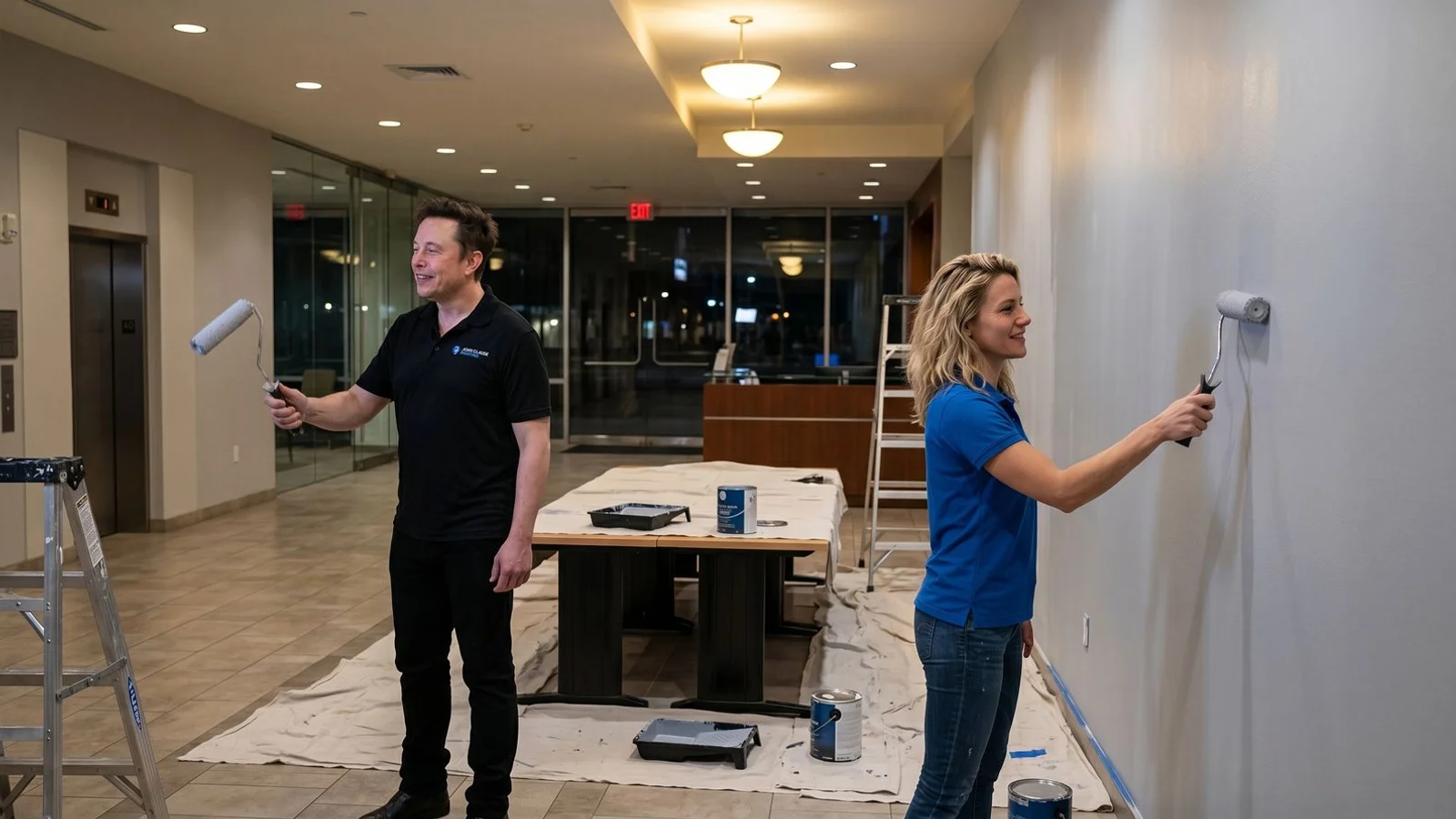
Commercial painting scheduling lives or dies by the calendar.
We know that a brilliant finish is completely irrelevant if tenants are calling your management office to complain about fumes on a Monday morning. The real challenge is executing these updates without disrupting the daily flow of business or residential life.
Proper sequencing and the right product choices are the dividing line between a smooth upgrade and a logistical nightmare.
Our team at John Claude Painting has completed countless occupied-building repaints across the Phoenix Valley. Let us look at the practical data, the actual products that work, and the precise workflows to manage your next project.
Three Scheduling Approaches
The three most effective scheduling approaches for occupied buildings include strict nights-and-weekends, phased unit-by-unit rollouts, and single-weekend common-area refreshes. Choosing the right timeline depends entirely on your building’s foot traffic and operational hours.
- Nights and weekends only: We often rely on night shift commercial painting for active offices, retail centers, and medical practices. The crew arrives after close, works from 6 PM to 2 AM, and thoroughly cleans up before the doors open. This schedule provides zero business-hours disruption, which is critical in a hot market where daytime exterior work is grueling and interior daytime work blocks tenants.
- Phased unit-by-unit: For multi-unit apartment complexes and HOA common areas, a localized approach works best. The team tackles one building at a time and moves to the next only when complete. This strategy keeps the total disruption window remarkably short for each resident.
- Single-weekend common-area refresh: Lobbies, corridors, and elevator banks benefit from a quick turnaround. The crew pushes through from Friday night to Sunday evening. Your building opens on Monday morning with everything fully wrapped and ready.
Product Selection for Occupied Work
Selecting zero-VOC, fast-drying, and low-odor formulations is the only way to safely handle painting a tenant occupied building. You must prioritize advanced acrylics and avoid oil-based products entirely unless addressing a highly specific industrial need.
We strongly recommend Benjamin Moore Eco Spec for sensitive environments like healthcare and daycare centers. This specialized 100 percent acrylic interior latex features a zero-VOC formula, and it is certified asthma and allergy friendly. The odor dissipates in less than an hour, allowing spaces to be reoccupied almost immediately.
Fast-dry lines are equally important for tight scheduling windows. Sherwin-Williams ProMar 200 HP Zero VOC is a reliable choice that delivers a dry-to-touch finish at 1.7 mils dry film thickness in just one hour. This efficiency allows crews to apply a second coat quickly and pack up before morning traffic begins.
- Zero-VOC or low-VOC products only, like Benjamin Moore Eco Spec.
- Fast-dry lines, such as SW ProMar 200 HP, for tight schedules.
- Low-odor formulations for medical and daycare settings.
- Avoid oil-based products unless absolutely necessary for specific rust prevention.
Notice Timing
Proper notice timing requires communicating with tenants at least 7 to 30 days in advance, depending on the scope of the painting project. Providing ample warning prevents access disputes and allows residents to plan accordingly.
The Arizona Residential Landlord and Tenant Act legally requires a minimum of 48 hours of notice for non-emergency entry. But treating that legal minimum as a project standard is a common mistake that frustrates residents.
We always extend this window significantly to build trust and ensure smooth access. For non-invasive common-area work, a 7 to 14 day tenant notice provides enough runway for people to adjust their routines. In-unit repaints require the longest lead time, ideally 21 to 30 days, so residents can move personal items or arrange pet care.
- Non-invasive common-area work: 7 to 14 day tenant notice.
- In-unit repaints: 21 to 30 days.
- Exterior scaffolding on active property: 14 to 21 days.
- Elevator or parking-access impacts: 10 to 14 days with an alternative-access plan.
Containment and Fume Control
Containing dust and controlling paint fumes requires physical barriers and active air management systems to protect building occupants. Erecting plastic sheeting and utilizing HEPA filtration keeps the work zone completely isolated.
We deploy negative air machines equipped with MERV 13 to 16 HEPA filters, like the industry-standard Dri-Eaz HEPA 500 system, to scrub the air continuously. This equipment pulls airborne particulates directly outside and prevents smells from creeping into adjacent occupied offices. Establishing negative air pressure is a non-negotiable standard for hallway repaints.
Floor-to-ceiling plastic sheeting must seal off the perimeters of the active work zone. Clear signage at every entry point warns tenants away from wet paint and trip hazards. Building management receives a daily debrief to confirm that containment protocols are holding strong.
- Plastic sheeting floor-to-ceiling at work-zone perimeters.
- HEPA filtration with outside venting to capture particulates.
- Negative air pressure where possible to manage odors.
- Signage at every entry point to the work zone.
- Daily debriefs with building management.
Medical, Dental, and Food Service
Healthcare and food service spaces demand strict adherence to infection-control protocols and rigorous post-paint sanitization. Coordinating with accreditation schedules ensures that the facility remains compliant and safe for patients or patrons.
The Joint Commission recently announced significant regulatory updates called Accreditation 360, which take full effect on January 1, 2026. This new standard consolidates Environment of Care rules into a single Physical Environment chapter.
We strictly coordinate with facility managers to ensure all painting aligns with these updated Life Safety compliance guidelines. Clinical spaces always require a documented Infection Control Risk Assessment before a single drop of paint is applied. Kitchen and food preparation areas mandate professional post-paint sanitization to meet local health department codes.
- Infection-control protocol coordination with the medical office manager.
- Deep clean requirements after paint in clinical spaces.
- Kitchen and food prep areas require post-paint sanitization.
- Coordinate with accreditation or inspection schedules.
Crew Scheduling
Maintaining a consistent crew and establishing a single point of contact prevents miscommunication during complex commercial projects. A unified team works faster, adheres to site rules, and provides peace of mind to property managers.
We guarantee same-team continuity across the entire job rather than cycling through a rotating cast of unfamiliar painters. Security is a major priority for HOAs and corporate centers in 2026, so visible contractor identification is essential. Every team member wears a uniform and displays vendor ID badges to meet strict tenant protocols.
The lead painter serves as your single point of contact for any immediate management questions. Daily shift hand-offs are fully documented to track progress against the timeline. This structured approach eliminates the confusion that often causes delays during multi-day renovations.
- Same-team continuity across the job.
- Uniform dress, ID badges if required by tenant protocols.
- Lead painter is the single point of contact for management.
- Daily shift hand-offs documented.
Tenant Notice Templates
A comprehensive tenant notice template should clearly explain the project scope, the timeline, and a reliable contact method for emergencies. Your painting contractor should supply the core text to make distribution easy for your management staff.
We provide the notice body text covering exactly what is happening, when it will occur, how long it will take, and what residents should expect. Property managers can then push this information out through their preferred distribution mechanism, whether that is a printed flyer, an email blast, or a digital portal like AppFolio.
An escalation contact must be listed prominently for any urgent tenant questions or concerns. A supplementary FAQ handout handles the most common worries regarding paint smells, pet safety, and window ventilation. Anticipating these questions drastically reduces the volume of calls flooding your front desk.
Your painter should provide:
- Notice body text explaining what, when, how long, and what to expect.
- Distribution mechanism options like a flyer, email, or management portal.
- Escalation contact for tenant questions.
- FAQ handout for common questions about smell, pets, and open windows.
Elevator and Access Protocols
High-rise commercial painting requires dedicated elevator padding, floor protection, and strict service elevator priority for material hauling. Securing these logistical pathways prevents accidental damage to expensive common areas.
Protecting your infrastructure is just as critical as applying the paint itself. We coordinate with the building engineer to install heavy-duty elevator padding before moving any equipment. Service elevator priority is arranged in advance to ensure crews can transport heavy buckets without delaying tenant traffic.
For common corridors, standard plastic film is a tripping hazard for residents. Utilizing rigid floor protection boards, such as Masonite, creates a safe and durable walking path over high-end carpets or tile. Coordination with site security guarantees reliable after-hours access for the night shifts.
For high-rise and multi-story commercial:
- Elevator padding coordinated with the building engineer.
- Service elevator priority for materials hauling.
- Floor protection in common corridors.
- Coordination with security for after-hours access.
Documentation Owners Receive
Owners and property managers receive detailed daily site reports, photo documentation, and a final warranty handoff to verify the project’s success. This paper trail ensures complete transparency and protects your long-term investment.
We deliver phased milestone check-offs so you can track the exact progress of each building or floor. Photo documentation provides visual proof of the surface preparation and the final coat, which is especially helpful for out-of-state property investors. A tenant complaint log is also maintained, though active communication protocols usually keep this completely empty.
A formal warranty handoff concludes the project, giving you the paperwork needed for future maintenance records. Taking this comprehensive approach ensures that the final result exceeds your expectations while respecting the daily lives of your occupants.
- Daily site reports.
- Phased milestone check-offs.
- Photo documentation.
- Final warranty handoff.
- Tenant complaint log (if any).
See our commercial painting service for scope walkthrough on your property.
Quick Answers
Can you paint our office without closing for the day?
Yes — most occupied office repaints run nights and weekends with low-VOC products; Monday mornings look fresh and smell clean.
How much tenant notice is standard?
7-14 days for non-invasive common-area work; 21-30 days for in-unit repaints requiring access.
Do you handle elevator protection?
Yes. We coordinate with building management on elevator padding, floor protection, and service-lift scheduling.
Keep Reading
Commercial Exterior Painting Cost for Office Buildings and Retail
What a full commercial exterior repaint runs per square foot in Phoenix, plus th...
Industrial Coatings for Phoenix Warehouses: Epoxy, Urethane, Elastomeric
Epoxy floors for forklifts, polyurethane for UV exteriors, elastomeric for monso...
Multi-Unit Apartment and HOA Repainting Programs
Reserve-study planning, phased sequencing, resident notices, and warranty handov...
Need a Real Estimate?
We'll walk your property and write a scoped proposal within 24 hours — no cost, no obligation.