
Stain, Odor, and Smoke Sealing Before Repainting
Water stains, smoke damage, pet odor — the sealer-primer step that decides whether your finish paint actually succeeds in Phoenix homes.
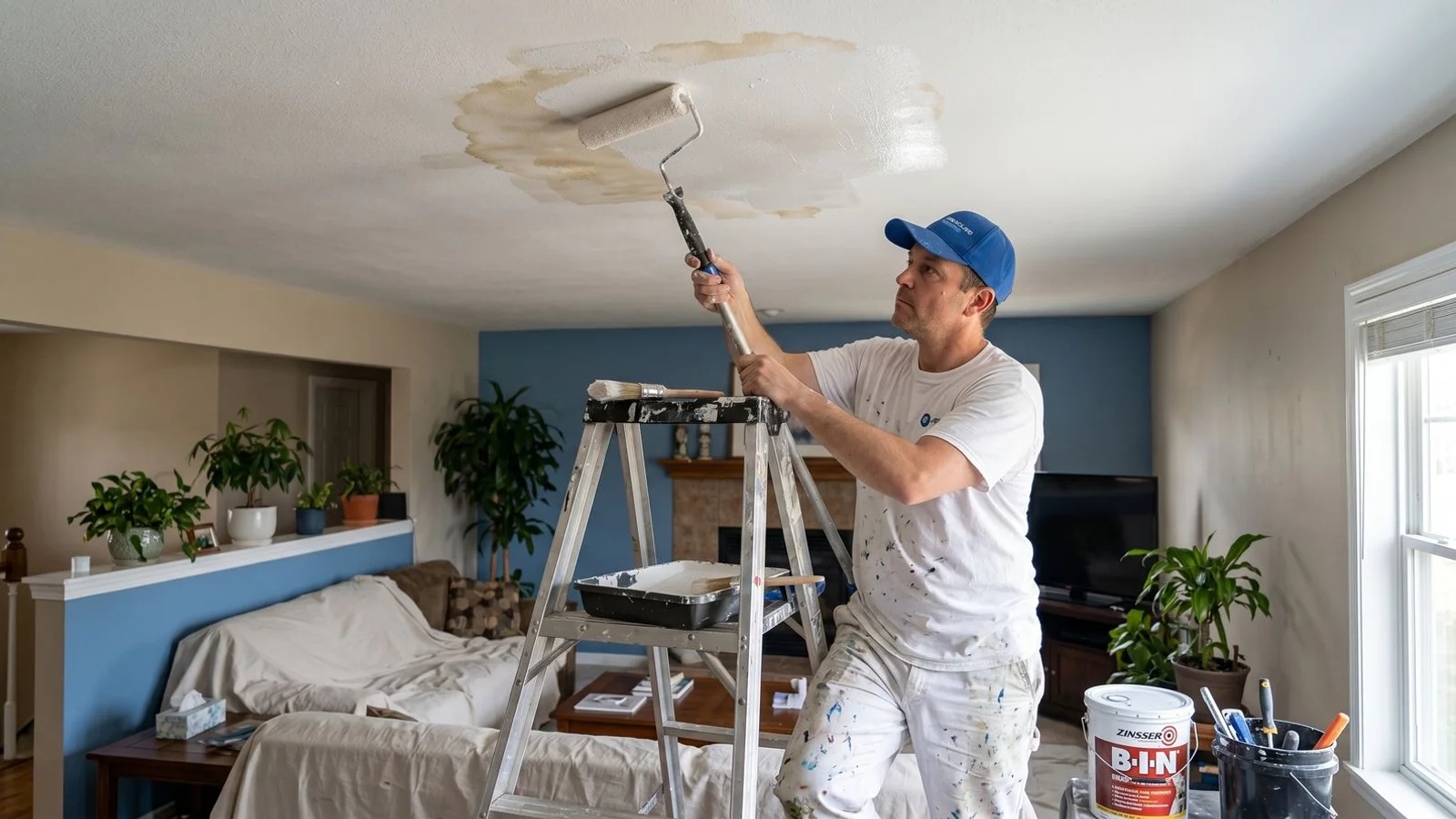
We see it constantly across the Phoenix Valley: homeowners trying to cover up a stubborn water mark or lingering pet smell with a fresh coat of premium latex paint. That expensive topcoat will look great for a few days before the underlying stain bleeds right back through. The chemical reality is that standard paint is formulated for color and durability, not for blocking aggressive contaminants.
Our team relies on a dedicated stain block primer smoke odor sealing step to permanently lock away these issues before the finish coat even opens. Let us walk you through exactly which primers work for specific problems and how to apply them correctly.
Shellac Primers (Our Default for Hard Stains)
Zinsser B-I-N Advanced Synthetic Shellac is our default choice for the most aggressive stains. This product permanently seals everything from severe water damage to heavy nicotine residue and pet odors. We prefer shellac because it dries to the touch in just 15 minutes and is ready for a topcoat in 45 minutes. You will need denatured alcohol for cleanup since water will not touch this formula.
Applying this requires proper ventilation. The strong odor dissipates quickly, but it is intense during the application phase. We recommend applying one solid coat over the affected zone using a cheap, disposable chip brush. Give the patched area a quick scuff with 120-grit sandpaper once it dries to ensure the topcoat bonds perfectly.
Oil-Based Primers
Products like Kilz Original and Zinsser Cover Stain handle moderate water marks and kitchen grease exceptionally well. These oil-based options are slightly less aggressive than shellac but offer a more budget-friendly price point per gallon. Our crews use these primarily for sealing new wood trim or covering stubborn grease splatters above stoves.
You should plan for a longer dry time when using oil-based sealers. Most formulas require two to four hours before you can safely apply a latex topcoat. Mineral spirits are absolutely necessary for cleaning your brushes and spills.
Quick Comparison: Shellac vs. Oil-Based Primers
| Feature | Shellac (Zinsser B-I-N) | Oil-Based (Kilz Original) |
|---|---|---|
| Best For | Pet urine, heavy smoke, sap | Kitchen grease, moderate water |
| Dry Time | 45 minutes | 2 to 4 hours |
| Cleanup | Denatured alcohol | Mineral spirits |
| Odor Level | Very strong, dissipates fast | Strong, lingers longer |
Water-Based “Stain Blockers”
Water-based stain-blocking primers like standard Kilz 2 or Zinsser Bulls Eye 1-2-3 work fine for minor cosmetic issues. They handle light pencil marks, scuffs, and kid scribbles without a problem. We rarely rely on them for serious issues like smoke or pet odor.
A water-soluble stain will simply reactivate and bleed through a water-based primer. These formulas are incredibly convenient because they clean up with soap and water and have almost zero odor. You should skip them entirely if you are dealing with moisture damage or heavy nicotine.
By Stain Type
Different contaminants require specific chemical approaches to prevent them from ruining your new paint job.
Water Stains
You must fix the source of the leak before applying any primer. Roof leaks, plumbing drips, or overflowing AC condensate lines will ruin a fresh patch immediately. We always verify the drywall is completely dry using a pinless moisture meter like the Klein Tools ET140. Apply Zinsser B-I-N or Cover Stain directly over the dried area once the moisture reading is at zero, extending your primer border two to three inches past the visible edge.
Smoke Damage
Heavy smoke damage requires a thorough cleaning with a TSP (tri-sodium phosphate) solution before any painting begins. Mixing a quarter cup of TSP with a gallon of warm water pulls surface tar and nicotine right out of the paint. We follow up with a solid coat of shellac primer to lock down the remaining odor. Fire restoration projects with severe damage often require complete drywall replacement instead of simple smoke damage paint.
Pet Urine on Walls
A shellac-based odor blocker is the only reliable way for pet odor sealing wall treatments. Uric acid crystals from pet accidents remain dormant in dry weather but reactivate the moment moisture hits them. We see this constantly during the Phoenix monsoon season when indoor humidity spikes. Skipping the shellac primer guarantees that the sharp ammonia smell will return.
Grease
Kitchen grease requires a heavy TSP wash followed by an oil-based or shellac primer. Water-based primers simply will not bond to greasy surfaces.
When Sealing Isn’t Enough
Certain types of damage destroy the structural integrity of your drywall completely. Sealing over compromised materials is a waste of time and money. We recommend full replacement when you encounter any of the following warning signs.
- Visible sagging or bubbling: Water sitting on the drywall paper degrades the gypsum core permanently.
- Soft or crumbly textures: Pressing firmly on the wall should yield zero movement.
- Charred or soot-embedded drywall: Fire damage that penetrates the paper layer cannot be safely sealed.
- Recurring pet-urine saturation: Subfloors or baseboards soaked repeatedly will rot from the inside out.
Replacing the damaged drywall and then applying a proper stain block primer to the surrounding areas is the only permanent fix. Paint alone will fail completely under these conditions.
Workflow
Follow this exact sequence to ensure your stain sealing holds up for years.
- Identify and fix the source: Stop the leak, seal the smoke source, or block pet access.
- Dry the substrate fully: Use a moisture meter to confirm the wall is completely dry.
- Clean with TSP: Wash away grease and tar with a TSP solution where applicable.
- Apply the primer: Brush shellac or oil-based primer specifically onto the affected areas.
- Spot-sand the patch: Scuff the primed area with 120-grit paper to remove glossy patches.
- Apply finish coats: Apply two full finish coats of premium interior paint.
See our interior painting service for stain-sealing as part of a full interior repaint. You can also grab a small can of Zinsser B-I-N for a simple DIY touch-up project to keep your home looking fresh.
Quick Answers
Will regular paint cover a water stain?
No. Water stains bleed through latex paint. Use a shellac-based stain blocker first, then finish paint.
How do you handle smoke damage on drywall?
Clean surfaces with TSP, seal with oil-based or shellac primer, then finish coat. Heavy damage may require drywall replacement.
Can paint eliminate pet urine odor?
Only if sealed first with a shellac-based odor-blocker. Untreated, the odor will return after any humidity exposure.
Keep Reading
Best Interior Paint for Phoenix Homes (Low-VOC, Desert-Ready)
Which interior paint lines actually hold up in Phoenix homes — Sherwin-Williams,...
DIY vs Hiring a Professional Interior Painter in Phoenix
Honest numbers on DIY painting: tool cost, time, skill, and resale risk vs hirin...
How Long Does Interior Painting Take in an Occupied Home?
Per-room and whole-home interior painting timelines for occupied Phoenix homes —...
Interior Painting Cost in Arizona: What Drives the Price
What Arizona interior painting actually costs per square foot and per room — plu...
Need a Real Estimate?
We'll walk your property and write a scoped proposal within 24 hours — no cost, no obligation.