
Two-Coat vs One-Coat Interior Painting
When one coat is genuinely enough and when it's a shortcut that costs you — a Phoenix homeowner's honest breakdown.
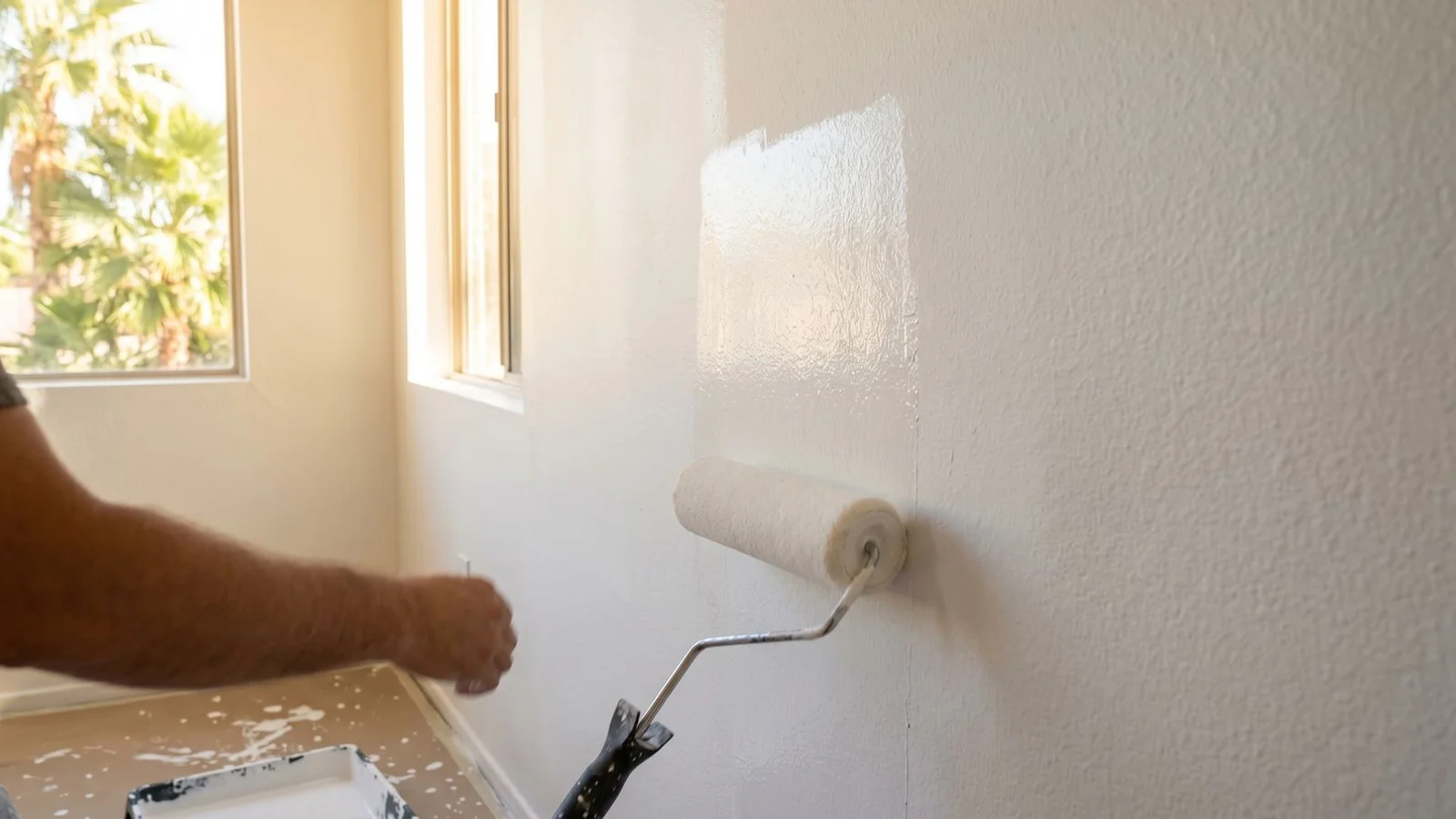
Many property owners assume paint is just about color, but the debate of one coat vs two coat interior painting is the single biggest variable in your finished wall quality.
Since establishing John Claude Painting, our experts see this confusion happen every week in the Phoenix Valley. The reality is that a single layer rarely achieves the durability your home needs against our dry desert air.
Our team is going to break down exactly when a single pass is acceptable, when it is simply a shortcut, and how to spot the difference on your next estimate.
When One Coat Is Enough
Property owners frequently ask, is one coat paint enough for a standard room update? A single pass of paint is honestly acceptable when you are doing a same-color refresh on a well-cleaned surface using a premium product like Benjamin Moore Regal Select.
We typically only recommend this approach for exact color matches or simple touch-up scenarios. The specific situations where one layer works include:
- Same-color refreshes: Applying a new coat over a well-painted, cleaned wall with a high-hide paint.
- Touch-up scenarios: Matching an existing finish after minor drywall repairs.
- Textured walls: Handling a rental turnover with a forgiving neutral color.
- Ceiling refreshes: Using a high-build ceiling paint that resists gravity and splatter.
To make a single application successful, the surface preparation must be flawless. Our crews advise washing the walls with a degreaser first, as the fine dust common in Phoenix homes prevents proper adhesion.
A 2026 pricing analysis from Angi notes that interior painting in Phoenix averages $2.00 to $5.00 per square foot. We know that stopping at one application keeps you on the lower end of that budget for a quick property flip.
Even in these ideal cases, most professional painters still roll a second layer for insurance. Our company policy requires that extra pass because it only adds about 25 to 40 percent more time and paint, while significantly boosting the washability of the final surface.
When Two Coats Are Mandatory
Two coats are absolutely mandatory when you are making a color change, painting over bare drywall, or using a high-sheen finish. We enforce this standard because premium paint warranties explicitly require a specific dry film thickness to perform correctly.
These are the non-negotiable scenarios for multiple layers:
- Color changes: Moving from dark to light, or light to dark, requires multiple passes to prevent the old shade from bleeding through.
- Primer-required substrates: Bare drywall, new wood, or fresh wall repairs absorb liquids rapidly like a sponge.
- Premium paint warranties: Manufacturers build their performance guarantees around a fully applied two-coat system.
- Spray applications: The first pass of a paint sprayer rarely builds the 3 to 4 mils of dry film thickness needed for daily wear.
- High-sheen finishes: Satin, semi-gloss, and gloss sheens reflect light and will highlight every single coverage inconsistency.
You must build a substantial film to achieve the durability required by most modern paint systems. Our painting specialists note that budget-friendly options contain fewer solids, meaning they might even require three layers to match the coverage of a premium job.
A common mistake is assuming that a “paint and primer in one” product eliminates the need for multiple finish layers. We always tell property owners that these dual products simply improve initial bonding but still need a second finish pass for full color saturation.
What Happens When a Painter Skips the Second Coat
Skipping the second layer leaves a thinner film on the wall, resulting in uneven color, poor washability, and premature fading. We see these issues constantly when evaluating failing paint jobs around the valley.
The most common problems include:
- Visible “flashing”: You will see shiny or dull spots where the first coat went on thicker or thinner.
- Color variation: The wall will look blotchy across the surface, especially under raking morning light.
- Lower washability: The protective film is thinner than the manufacturer intended, so scrubbing a smudge might remove the paint itself.
- Sooner touch-ups: Daily wear and tear breaks through the thin film much faster.
Most Phoenix homeowners do not notice single-coat issues for the first three to six months. We find that by the time the paint starts wiping off during routine cleaning, the contractor warranty conversation gets incredibly murky.
A verified industry tip is to shine a bright LED flashlight parallel to the wall to check for uniform coverage before signing off on the job. Our team uses this exact lighting technique to ensure every square inch meets professional standards.
Warranty Implications
Premium manufacturer warranties explicitly specify a two-coat application in their official terms to guarantee longevity. We strictly follow these guidelines because cutting to one layer instantly voids the product warranty.
| Premium Paint Line | Coat Requirement | Key Technology |
|---|---|---|
| Sherwin-Williams Emerald® | Two finish coats required | Cross-linking 100% acrylic |
| Benjamin Moore Aura® | Two coats for full coverage | Proprietary Color Lock® |
| Dunn-Edwards Aristoshield® | Two coats over primer | Urethane alkyd resin |
Failing to meet these specifications means the manufacturer will not cover claims for premature peeling or fading. Our installers know that Benjamin Moore Aura uses its proprietary Color Lock technology to bind pigments, and this system requires that second layer to function.
A painter trying to cut corners on a high-end product like Sherwin-Williams Emerald is simply wasting your money on premium materials. We always provide documentation showing the correct application method so your investment remains fully protected.
Why the Single-Coat Quote Happens: One Coat vs Two Coat Interior Painting
The single-coat quote happens because labor and materials are the two largest expenses in any painting business. We frequently compete against estimates that strategically shave off the second layer to appear more budget-friendly.
Applying two layers naturally increases the two coat paint cost, adding roughly 25 to 40 percent to the total labor and materials of a project. Our analysts have seen recent estimates where a complete 2,000-square-foot interior in Arizona ranges from $4,000 to $10,000, making a 30 percent reduction look highly appealing on paper.
“A contractor trying to win solely on price simply removes the necessary time required for the first layer to cure, sacrificing your home’s protection for a cheaper bid.”
We caution against accepting these significantly lower bids, as the finish will underperform and require a costly repaint years sooner. To protect yourself, you should always ask contractors about their exact curing times between applications.
Our best advice is to verify that they plan to wait the standard two to four hours required for latex paint to properly set before rolling the second time.
How to Read Your Quote
Reading your estimate carefully requires looking for explicit language that dictates the exact number of applications. We urge property owners to reject ambiguous wording that leaves room for interpretation.
Look for explicit “two coats” language on the written estimate. If the quote says:
- “Two full coats”: This is good and represents a standard professional approach.
- “Two coats where needed”: This phrase is highly ambiguous, so you should ask the contractor to make it explicit.
- “Finish coat”: This industry jargon usually means one layer, so clarify the details before signing.
- No coat language at all: You must ask for a revised contract with exact specifications.
See interior painting cost in Arizona for honest price ranges when multiple layers are properly specified. We detail how to write exact coat counts into every single contract on our interior painting service page.
Understanding the facts about one coat vs two coat interior painting ensures your home gets the durable finish it deserves. Our team is ready to provide a transparent estimate for your next project, so contact us today to schedule your consultation.
Quick Answers
Is one coat of paint ever enough?
Same-color touch-up refresh with a premium high-hide paint — sometimes. For color changes or primer-required substrates, always two.
Does the manufacturer warranty require two coats?
Most premium lines (SW Emerald, DE Aristoshield, BM Aura) specify two coats in their warranty terms.
Why do some painters quote one coat?
To win on price — it saves labor and paint. But the finish usually shows and rework erases the savings.
Keep Reading
Best Interior Paint for Phoenix Homes (Low-VOC, Desert-Ready)
Which interior paint lines actually hold up in Phoenix homes — Sherwin-Williams,...
DIY vs Hiring a Professional Interior Painter in Phoenix
Honest numbers on DIY painting: tool cost, time, skill, and resale risk vs hirin...
How Long Does Interior Painting Take in an Occupied Home?
Per-room and whole-home interior painting timelines for occupied Phoenix homes —...
Interior Painting Cost in Arizona: What Drives the Price
What Arizona interior painting actually costs per square foot and per room — plu...
Need a Real Estimate?
We'll walk your property and write a scoped proposal within 24 hours — no cost, no obligation.