
Elastomeric vs Acrylic Latex on Phoenix Stucco
Elastomeric vs acrylic on Phoenix stucco — film thickness, breathability, warranty, cost delta. When each wins.
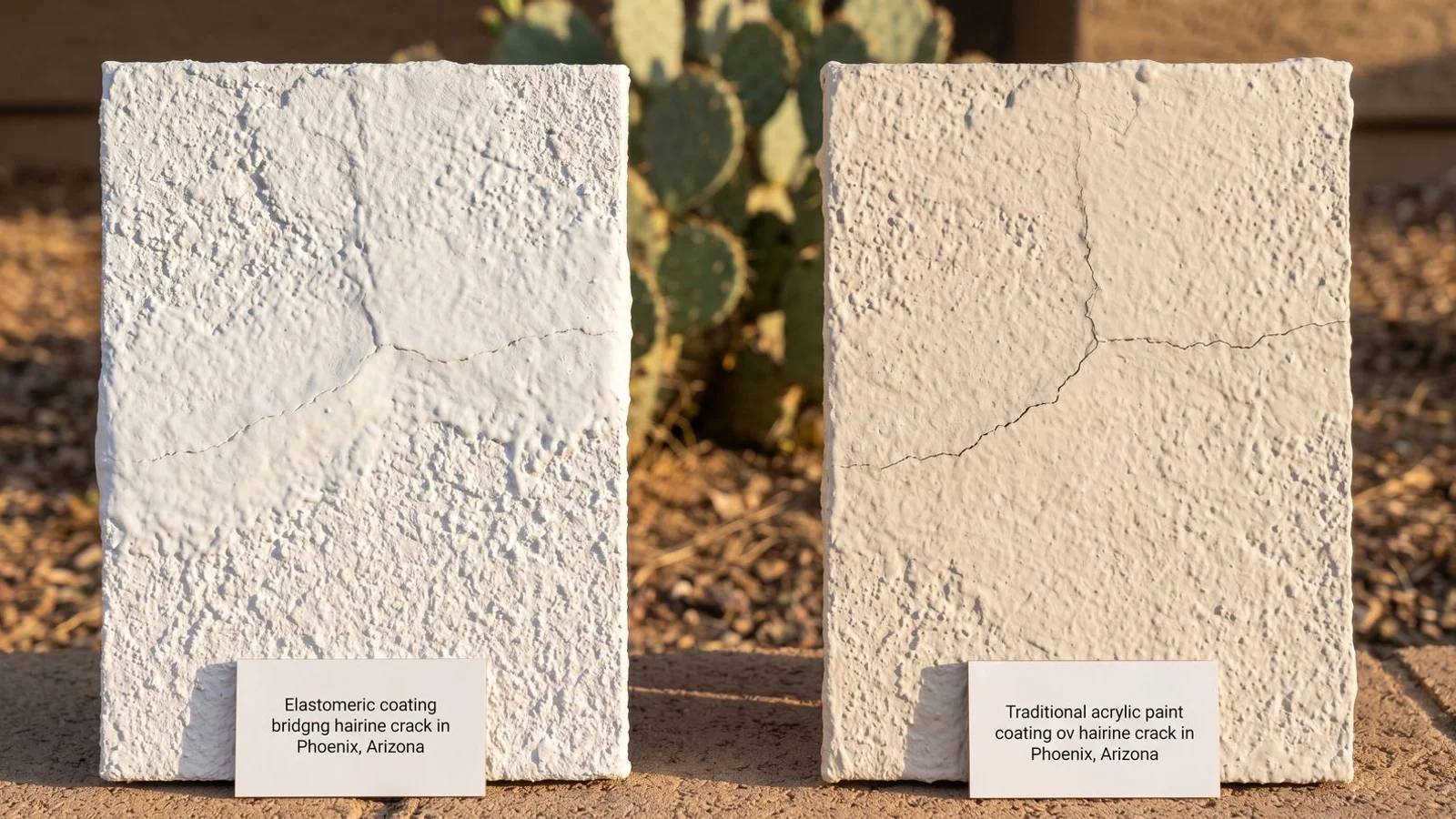
Our crew at John Claude Painting consistently sees the debate over elastomeric vs acrylic stucco paint flare up every single summer.
This choice dictates how well your exterior survives the brutal Arizona heat. Many marketing campaigns push heavy, rubberized coatings as the ultimate upgrade.
We know from direct application that thick finishes can actually cause severe structural damage if your walls need to breathe. Sometimes, a heavy-duty layer is the exact right call to uphold our standard of superior craft. Often, it acts as complete overkill for a standard residential property.
Our primary objective here is to help you look past the sales pitches. Let’s review the actual performance data and outline a straightforward way to choose the correct protection for your stucco.
The Core Difference
We categorize exterior stucco paints into two entirely separate functional classes. Standard premium options use a 100 percent acrylic latex formula. High-end choices like Dunn-Edwards Evershield deliver strong ultra-violet protection and excellent breathability.
Elastomeric products function more like a rubberized liquid membrane. These specialty coatings can stretch anywhere from 300 to 800 percent beyond their original size. Our application teams rely on this elasticity to bridge structural gaps during seasonal temperature swings.
| Feature | Premium Acrylic Latex | Elastomeric Coating |
|---|---|---|
| Film Thickness | 3 to 5 mils dry | 10 to 20 mils dry (2 to 4 times thicker) |
| Breathability | High (allows vapor escape) | Low (forms a dense waterproof seal) |
| Crack-Bridging | Minimal (hairlines under 1/128 inch) | Excellent (covers gaps up to 1/32 inch) |
| Lifespan (Phoenix) | 8 to 12 years | 12 to 15 years |
| Top Products | Sherwin-Williams Emerald, Dunn-Edwards Evershield | Behr Premium Elastomeric, Loxon XP |
When Elastomeric Wins
Heavy-duty rubberized finishes excel on heavily damaged or unshaded south-facing elevations. Our exterior inspections frequently reveal severe thermal cycling damage in these specific areas. The rapid expansion and contraction process destroys rigid paint layers.
We recommend these thick films when a property has widespread hairline cracks or a history of repeated fracturing. The material acts as a continuous waterproof shield during the late summer monsoon season. It easily handles the driven rain that typically forces water into unprotected gaps.
Older homes approaching the end of their stucco lifespan also benefit heavily from this approach. You can stretch the functional life of aging masonry by adding this dense protective layer. For those searching for reliable elastomeric phoenix solutions, this thick membrane provides excellent security.
Consider an elastomeric application if your property features:
- Constant thermal stress: Walls exposed directly to unshaded southern or western afternoon sun.
- Widespread hairline cracks: Surfaces showing 15 or more visible fractures per 100 square feet.
- Aging substrates: Older stucco approaching end-of-life where a full replacement is not immediately possible.
- High water exposure: Elevations highly vulnerable to wind-driven monsoon rains.
When Acrylic Wins
We default to high-quality acrylics for the vast majority of standard residential repaints. Newer properties built after 2010 usually have intact masonry with minimal stress histories. These sound surfaces do not require a heavy rubber membrane.
A breathable finish is strictly required if your walls show signs of efflorescence. This white, chalky powder indicates that alkaline salts are actively migrating out of the masonry. Our crews know that sealing this vapor inside will cause immediate failure and massive peeling.
Standard premium paints also deliver superior color retention for lighter shades. Selecting a highly reflective color like Sherwin-Williams Alabaster actually shaves degrees off your exterior surface temperature. This simple color choice reduces the overall thermal stress on your home. When sourcing acrylic stucco paint arizona homeowners should prioritize ultra-violet fade resistance.
Acrylic stays the best option for:
- Healthy stucco: Surfaces with zero or near-zero visible cracking.
- Moisture-prone walls: Areas with poor drainage or active efflorescence that demand high vapor transmission.
- Budget-conscious projects: Jobs where avoiding the 20 to 40 percent premium of rubberized coatings makes financial sense.
- Previously coated homes: Repaints over older elastomeric layers where adding another thick film risks severe adhesion loss.
Cost Delta
Our estimating department typically sees a price difference of $2,500 to $4,000 between these two application methods. The premium stems directly from the intense labor and material volume required for rubberized finishes. Contractors must apply elastomeric products at a much heavier rate to achieve the required 10 to 20 mils of dry thickness.
This heavy build process demands multiple slow passes and significantly more product. We factor in extra days for thick masonry patches to cure, which typically take 24 to 48 hours in the local heat. A standard acrylic application moves much faster and consumes fewer gallons.
| System Type (2,000 sq ft Home) | Estimated Price Range | Primary Cost Drivers |
|---|---|---|
| Premium Acrylic (Evershield, Emerald Rain Refresh) | $6,500 to $10,500 | Standard prep, faster application, lower material volume. |
| Elastomeric System (Loxon XP, full elastomeric) | $9,000 to $14,500 | Extensive crack filling, slow heavy-build rolling, specialized masonry primers. |
The final cost reflects the extensive preparation needed for a successful waterproof seal. You are essentially paying a premium for advanced crack mitigation and specialized gap-filling labor.
The Moisture Trap Risk
We consider trapped moisture to be the single biggest threat when applying dense coatings. Rubberized paint creates an incredible barrier against outside rain, but it also stops interior vapor from escaping. This lack of breathability turns into a massive liability on problematic walls.
If water gets behind the stucco, the sun will rapidly heat that trapped vapor. The expanding pressure literally pushes the thick paint film right off the wall.
Our crews have seen this dynamic create heavy blisters across entire exterior sections. Severe substrate rot and crumbling masonry inevitably follow.
You must avoid thick, non-breathable films in these specific scenarios:
- Poor grading: Walls facing underground moisture migration or standing water issues.
- Old lath systems: Historic stucco applications that require constant vapor transmission.
- Active efflorescence: Masonry zones pushing out white alkaline salts.
- Vulnerable entry points: Surfaces with poorly sealed windows, damaged eaves, or failing parapet caps.
We always enforce a strict preparation protocol to prevent these failures. You must diagnose and completely fix the source of the water intrusion first. Contractors should trench slightly below grade to properly seal the foundation line. Finally, always apply a high-quality breathable masonry primer like Sherwin-Williams Loxon Conditioner before adding the heavy topcoat.
Warranty Implications
Our clients frequently base their final choice on the length of the manufacturer guarantee. The length of protection varies noticeably between these two chemical formulas.
- Premium Acrylics: Generally offer a reliable 8 to 10-year product warranty.
- Standard Elastomerics: Typically cover 10 to 15 years due to the thicker film build.
- Proprietary Coatings: High-end formulations like Sunland CeramiCoat sometimes advertise a 20-year lifespan.
- Painter’s Workmanship: Professional application guarantees usually sit between 5 and 10 years for both systems.
We strongly encourage reading the fine print regarding substrate exclusions. Most product guarantees are strictly prorated and will not cover damage if the underlying stucco cracks. If the foundational masonry fractures and splits the paint, the factory will instantly deny your claim.
Our workmanship warranty protects against application failures, but a solid guarantee cannot stop shifting dirt. Proper surface preparation always matters infinitely more than the marketing promises on the can.
Decision Framework
We tell every homeowner that the smartest choice starts with a physical inspection. Take a walk around your property during the cooler morning hours. Avoid evaluating your exterior in direct afternoon sun or when surfaces exceed 90 degrees, as the intense glare hides critical details.
Our favorite field test involves counting the visible hairline fractures within a 100-square-foot section. This simple metric provides a surprisingly accurate guide for selecting the correct coating.
- Zero or near-zero cracking: Choose a premium acrylic system.
- A handful of cracks (5 to 15): Apply a premium acrylic paired with a crack-bridging primer, or start considering an elastomeric upgrade.
- Many fractures (15+): Commit to a full elastomeric system to ensure adequate waterproofing.
- Widespread cracking: Apply a full elastomeric layer, but only after scheduling a consultation with a masonry specialist.
We always recommend cleaning the surface with a low-pressure hose rather than a harsh power washer before making your final call. High-pressure water easily drives moisture deep behind compromised masonry.
See our stucco painting and repair service for elevation-by-elevation specifications. You can also review our guide on the best exterior paint for Arizona heat for direct product-line comparisons.
Conclusion: Elastomeric vs Acrylic Stucco Paint
Our team knows that protecting your home in this harsh climate requires making informed, strategic choices.
The debate over elastomeric vs acrylic stucco paint comes down to the current health of your walls.
Heavy, rubberized coatings provide unmatched defense for aging, highly stressed exteriors. Standard, breathable finishes offer the safest, most cost-effective solution for newer properties.
We encourage you to take that walk around your property this week. Assess your elevations, count the visible stress marks, and check your drainage zones.
Reach out to a local professional if you spot severe blistering or suspect active water intrusion. Taking action now ensures your exterior remains beautiful and structurally sound for the next decade.
Quick Answers
Do I really need elastomeric on my Phoenix stucco?
Not always. Intact stucco with no history of cracking does fine with a premium acrylic at lower cost.
What's the cost difference between the two?
Elastomeric runs 20-40% more per square foot due to film thickness and product price.
Can elastomeric trap moisture?
Yes if applied over damp stucco or on walls with drainage issues. Proper prep and breathable primer prevent it.
Keep Reading
Need a Real Estimate?
We'll walk your property and write a scoped proposal within 24 hours — no cost, no obligation.