
Stucco Blistering, Chalking, and Hairline Cracks
Decode Phoenix stucco failures — cosmetic vs structural — so you know when to repair and when to call a specialist.
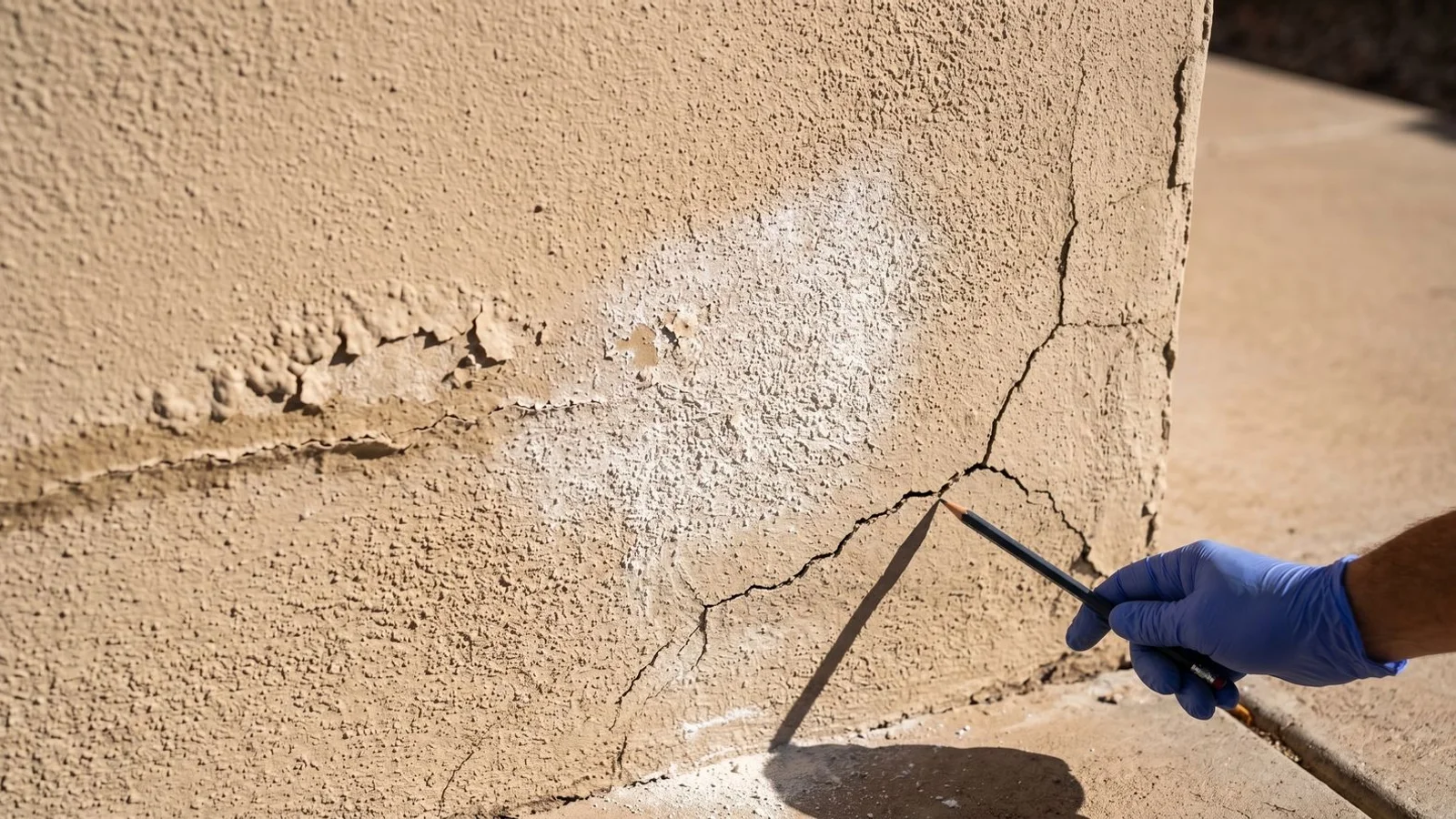
Phoenix stucco fails in predictable patterns. Heat and sun take a massive toll on exterior finishes. From what we have seen at John Claude Painting, catching these early warning signs saves thousands in repair costs down the road.
Here is how to read your walls. You will easily decide whether a flaw is purely cosmetic or structurally threatening.
Let us examine the specific symptoms and the exact steps you need to take.
Blistering
Stucco blistering in Phoenix usually points directly to trapped moisture trying to escape the wall. These bubbles or “balloons” of paint typically show up near eaves, fascia boards, or heavily sun-baked south-facing walls.
Our crews constantly see this issue after heavy monsoon seasons. A failing paint film traps the water, causing the surface to swell outward. Other common causes include painting over damp stucco, applying inadequate primer on an alkaline surface, and intense thermal cycling on dark-colored walls.
Here is how to fix the problem permanently:
- Scrape the blistered area completely clean with a wide putty knife.
- Hunt down the actual water source, such as a roof leak, broken irrigation line, or overflowing downspout.
- Let the bare substrate dry fully until a digital moisture meter reads below 15 percent.
- Spot-prime the raw stucco with a high-quality, alkali-resistant product like Sherwin-Williams Loxon Primer.
- Recoat the patch to match the surrounding wall.
If blistering ruins more than 20 percent of a single elevation, you should plan for a full-wall recoat. Spot patching larger areas almost always leads to a blotchy, uneven finish.
Chalking
Stucco chalking in Arizona happens when intense ultraviolet light breaks down the chemical binders in your exterior paint. You will notice a dusty, faded-looking surface that leaves a powdery white residue on your hand when you wipe the wall.
We see this daily, since the local UV index regularly hits 11 or higher during the summer months. This relentless sun exposure leaves only loose, unbound pigment behind.
To stop the chalking and restore the wall, follow these steps:
- Power wash the surface at a moderate 3000 PSI to blast away the chalky residue without damaging the stucco texture.
- Allow the wall to dry completely for 24 to 48 hours.
- Recoat the surface with a premium, 100-percent acrylic UV-resistant product. You can review our top recommendations in this guide to the best exterior paint for Arizona heat.
A light dusting of chalk might only need a targeted recoat on the hardest-hit walls. However, whole-wall chalking generally signals that a full exterior repaint is overdue.
Hairline Cracks
Stucco cracks in Phoenix are incredibly common, but identifying their specific type is critical for your home’s safety. Look for thin, hair-width fissures, which often develop at the corners of doors, near window returns, and directly under your eaves.
Our diagnostic process categorizes these fractures into three distinct groups. Thermal or shrinkage cracks appear as widespread hairlines and are almost purely cosmetic. Settlement cracks usually run vertically at corners or stretch diagonally across a wall.
Structural cracks are much more severe, typically measuring wider than a pencil lead and running longer than three feet.
| Crack Type | Identification Trick | Recommended Action |
|---|---|---|
| Thermal / Shrinkage | Thinner than a standard credit card. | Patch, texture, and paint. |
| Settlement | Diagonal lines near windows or doors. | Monitor closely for widening over six months. |
| Structural | Wider than 1/16 inch and longer than 3 feet. | Call a structural engineer immediately. |
Fix for thermal and cosmetic hairlines:
- Fill the fissure with a premium polymer-modified patch or a high-grade polyurethane sealant like MasterSeal NP1.
- Texture-match the repaired area to blend seamlessly into the existing wall.
- Apply a masonry primer and recoat with exterior paint.
Structural fractures always require an evaluation from a stucco specialist or a structural engineer before any paint goes on the wall. Masking a structural failure with paint will only hide a dangerous problem.
Efflorescence
Efflorescence appears as white, crystalline, powdery deposits clustering along the lower sections of your walls or near garden planters. This frustrating issue occurs when water migrates through the porous stucco and carries dissolved calcium salts straight to the surface.
We frequently trace this problem back to chronic over-irrigation or poor yard drainage. The water evaporates in the dry desert air, but the stubborn salt crystals remain firmly attached to the wall.
Here is the correct protocol to eliminate the deposits:
- Identify and fix the actual water source, checking for poor drainage grading, leaky hose bibs, or misaligned sprinkler heads.
- Vigorously brush off the loose crystalline buildup with a stiff wire brush.
- Apply a mild acid wash using a 10-to-1 dilution of water to muriatic acid to neutralize the remaining salts. Always pour the acid slowly into the water for safety.
- Let the cleaned area dry completely.
- Prime the raw spots with a breathable, alkali-resistant primer.
- Topcoat the repair with a breathable acrylic paint rather than a rubbery elastomeric coating.
Applying a thick elastomeric paint over unresolved efflorescence acts like a plastic bag, trapping even more moisture and severely worsening the structural damage over time.
Peeling at Eaves, Fascia
Peeling paint near your eaves and fascia boards usually stems from trapped moisture or a severe breakdown of primer adhesion. These high-stress transition areas endure intense radiant heat baking down from the roof tiles, which rapidly degrades the paint film.
Our painters often spot this peeling before any other failure on a house. It serves as a highly visible warning sign that the protective barrier has failed.
To secure the peeling sections:
- Scrape away all loose, flaking paint until you reach a firmly bonded edge.
- Spot-prime the bare wood or stucco areas with a high-adhesion product like Zinsser Peel Stop to lock down the edges.
- Apply a fresh, durable topcoat.
Severe peeling at your eaves is frequently the first undeniable sign that a full exterior repaint is completely overdue. Ignoring this early warning leaves your raw wood exposed to rot and termite damage.
Diagnostic Workflow
A systematic inspection is the only reliable way to evaluate your exterior walls properly. Catching these failure modes early requires a methodical approach and a keen eye for small details.
We highly recommend running through this exact checklist every fall and spring. A simple walk around the yard can uncover hidden problems before they require major structural repairs.
- Walk the entire property in the early morning light around 7 AM, as the low sun angle casts shadows that instantly highlight texture flaws.
- Photograph every visible failure mode for your records.
- Identify any active water sources near the affected areas, paying close attention to sprinkler overspray zones.
- Measure the exact crack widths, placing a quarter next to the fissure in your photos for a consistent size reference.
- Decide definitively between a targeted repair, a full-home repaint, or consulting a structural specialist.
You can review our stucco painting and repair service to schedule a diagnostic walk-through with a Phoenix-experienced painter. Alternatively, study the signs your exterior paint is failing in the Arizona sun to expand your vocabulary on broader structural failures.
Quick Answers
Are hairline stucco cracks urgent?
Usually cosmetic. Repair during next repaint. Cracks wider than a pencil lead or running at corners signal structural — get a specialist.
What causes stucco blistering?
Moisture trapped behind paint film, or previous paint applied over damp stucco. Usually requires full film removal in that area.
Is efflorescence a big problem?
It signals water migration. Clean with a mild acid wash, address the source (drainage, irrigation), then repaint with a breathable system.
Need a Real Estimate?
We'll walk your property and write a scoped proposal within 24 hours — no cost, no obligation.