
Signs Your Exterior Paint is Failing in Arizona
Chalking, blistering, fading, efflorescence — diagnose Phoenix exterior paint failure and decide between targeted fix and full repaint.
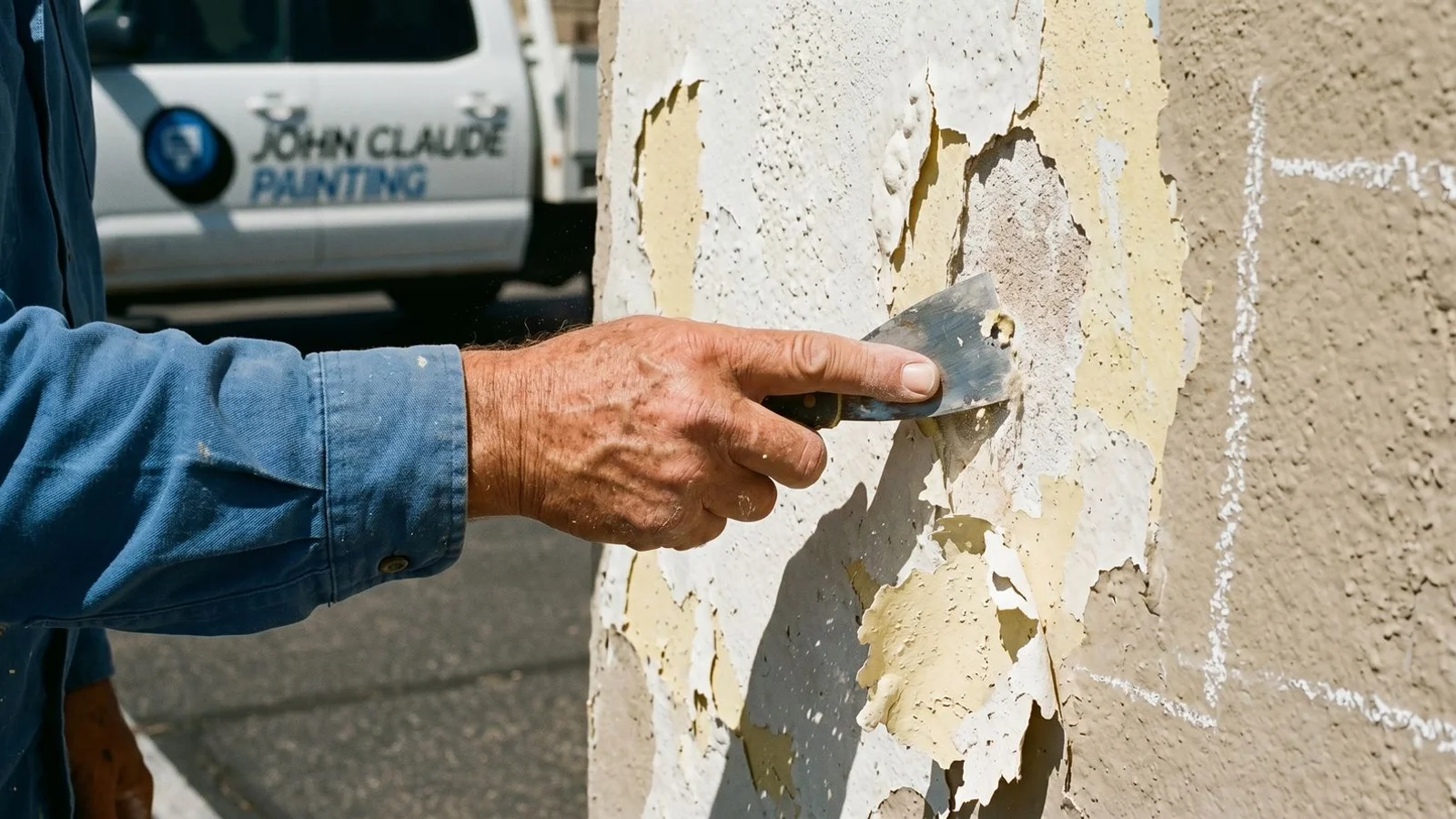
You know how quickly a fresh coat of paint can start looking tired in the desert. Phoenix exterior paint fails in a handful of predictable ways, and each issue has a signature look with a corresponding fix.
The sun here is brutal on building materials. It tests the limits of every protective coating available.
Our team at John Claude Painting built this guide around reliable solutions and superior craftsmanship. Knowing exactly what is happening to your walls makes choosing the right repair much easier.
Let’s look at the common types of exterior paint failure in Arizona. We can examine what the data actually tells us and explore practical ways to respond.
Catching these warning signs early will save you thousands.
1. Chalking (UV Binder Breakdown)
Standard acrylic paint is engineered for a national average of 1,800 annual sun hours. Phoenix receives nearly 3,900 sun hours per year. This massive difference is the main reason you see chalking so often on local homes.
The ultraviolet radiation literally breaks down the chemical binders holding the paint film together. This process leaves a loose, powdery pigment right on the surface.
We regularly see these highly exposed south and west elevations reach 160 to 180 degrees Fahrenheit in the summer. Extreme heat speeds up the deterioration process significantly.
- Test: Wipe your bare hand firmly across a south facing wall at knee height. Finding a heavy white residue means you have chalking.
- Fix: A thorough power wash is necessary to remove the loose chalk before applying a full recoat. Isolated chalking only requires a targeted wall recoat.
- Upgrade: Using a 100 percent acrylic or elastomeric coating offers much better UV resistance for your next application.
Chalking is mostly a paint-film-only problem initially. Heavy stucco chalking in Phoenix eventually invites moisture ingress and causes serious structural damage.
2. Blistering (Moisture or Thermal)
Bubbles forming in the paint film typically show up at eaves, fascia boards, and south walls. These blisters happen when either moisture or extreme heat gets trapped beneath the surface layer.
- Moisture blisters: These bubbles contain actual liquid when pressed. They are caused by water trapped behind the film from plumbing leaks, painting over wet stucco, or using a poor primer.
- Thermal blisters: These bubbles feel dry when pressed. They are caused by the 30 to 40 degree daily temperature swings stressing and stretching the film.
Our crews often trace moisture blisters right back to misaligned sprinkler heads. High-pressure irrigation systems frequently spray mineral-heavy tap water directly onto the lower sections of the house.
To fix the problem, you must scrape the blistered area completely. Investigate the moisture source immediately if the bubbles are liquid-filled.
You can then re-prime and re-coat the surface. Heavy paint blistering in Arizona requires a full elevation recoat to ensure proper protection.
3. Fading (Pigment UV Breakdown)
Color loss is an incredibly common sight across the Valley, especially in deep reds, rich blues, and dark earth tones. The film can still be physically intact and functional even though the appearance looks washed out.
Darker colors absorb significantly more solar energy than lighter shades. A 2026 industry report noted that dark budget paint on a south facing wall can lose 20 to 30 percent of its color saturation within just four years.
- Test: Compare the color on a south facing wall to a protected north facing wall. A noticeable difference confirms significant fading.
- Fix: Fading is primarily a cosmetic issue. You can usually address it during your next scheduled repaint.
- Prevention: Premium paints formulated with specific UV-blocking compounds will retain their vibrancy much longer.
Fading alone does not require immediate action unless aesthetics demand it. Sun-bleached walls are simply an inevitable part of living in the desert.
4. Efflorescence (Salt Crystallization)
You might notice white, powdery, crystalline deposits forming on lower walls and near garden irrigation. This is called efflorescence, and it occurs when water migrates through porous stucco and deposits dissolved salts on the surface as it evaporates.
In our dry climate, this evaporation happens incredibly fast. Tap water in the area is notoriously hard and packed with minerals, making these salty blooms a frequent headache for homeowners.
- Diagnose the cause: Locate the water source creating the problem. This is usually overactive irrigation, poor drainage, or a hidden plumbing leak.
- Clean the surface: Scrub the area with a stiff bristle brush and a mild acid wash, such as diluted citric or muriatic acid.
- Seal and recoat: Apply a breathable alkali-resistant primer before putting on the final coat.
Painting over efflorescence without fixing the water source just delays the inevitable. The salt will push right through the new paint in a matter of months.
5. Hairline Cracking
Fine cracks frequently appear on stucco, especially around sharp corners and window returns. The intense thermal expansion during a summer day, followed by rapid cooling at night, constantly stresses the building exterior.
- Thermal cracks: These tiny fissures are mostly cosmetic. You can easily repair them during your next repaint.
- Structural cracks: These gaps are wider than a pencil lead and usually run along corners. You should consult a stucco specialist before painting over them.
We highly recommend using an elastomeric coating for properties with frequent thermal cracking. This specialized paint can stretch up to 600 percent to bridge those tiny gaps as the house shifts.
See stucco blistering, chalking, and hairline cracks for the full diagnostic walk-through.
6. Peeling at Eaves, Fascia, Soffits
Paint lifting cleanly off wood or metal substrates is a glaring warning sign. This peeling is often the first visible indicator that a repaint is completely overdue.
The primary causes are inadequate primer, trapped moisture under the film, or severe UV degradation destroying the paint’s adhesion. Wood fascia boards take a terrible beating from the dry air and subsequent monsoon moisture.
- Scrape: Remove all the loose, flaking paint first to create a smooth base.
- Prime: Spot-prime the bare substrate with a high-quality product to seal the wood.
- Recoat: Apply a durable final layer to lock out the weather and stop moisture intrusion.
Ignoring peeling wood trim quickly leads to dry rot. Replacing damaged fascia boards is far more expensive than maintaining a solid coat of paint.
Triage
Knowing exactly when to patch and when to completely start over saves you money. Most properties in the area need a full exterior update every five to seven years.
| Damage Scope | Recommended Action | Important Context |
|---|---|---|
| Isolated Failure | Targeted recoat | Works best for a single wall or elevation with matching paint. |
| Widespread Damage | Full repaint | Whole-wall chalking or cracking requires a fresh start. Touch-ups on an aged base show obvious color variation. |
| Moisture Issues | Fix the source first | Painting over a wet substrate guarantees early failure again. |
We always advise checking your most exposed walls annually. Catching a small blister early prevents it from becoming a massive peeling problem next season.
See how often should you repaint a Phoenix home’s exterior for typical cycle planning, and our exterior painting service for failure-mode-specific scoping. Reach out to our team today if you need a professional assessment of your property.
Quick Answers
What is paint chalking?
UV breaks down the paint binder, leaving loose pigment. Wipe with your hand — if it comes away white, you're chalking.
Is blistering always moisture?
No. Thermal blistering from heat-cycle expansion looks similar. Moisture blisters contain liquid; thermal blisters are dry.
Do faded colors mean the paint failed?
Fading is pigment UV breakdown — the film can still protect. But heavy fading usually coincides with chalking, which does need repainting.
Keep Reading
Best Exterior Paint for Arizona Heat: Brands, Lines, and Finishes
Dunn-Edwards Evershield, Sherwin-Williams Emerald, Loxon XP — which exterior pai...
Best Time of Year to Paint Exterior in Phoenix (Monsoon and Heat Timing)
Paint in 115° summer or wait for October? The real paint-film temperature limits...
Exterior Painting Cost in Arizona: What a Full-House Repaint Runs
What a full-exterior repaint actually runs in Arizona per square foot, plus the ...
HOA Paint Color Approval in Phoenix-Area Master-Planned Communities
How ARC color approval works in DC Ranch, Grayhawk, Vistancia, Eastmark, Seville...
Need a Real Estimate?
We'll walk your property and write a scoped proposal within 24 hours — no cost, no obligation.