
Cabinet Painting Timeline and What to Expect
The 3-7 day disruption of a cabinet repaint — door removal, spray booth, cure time, and the reinstall. Plan meals and routine accordingly.
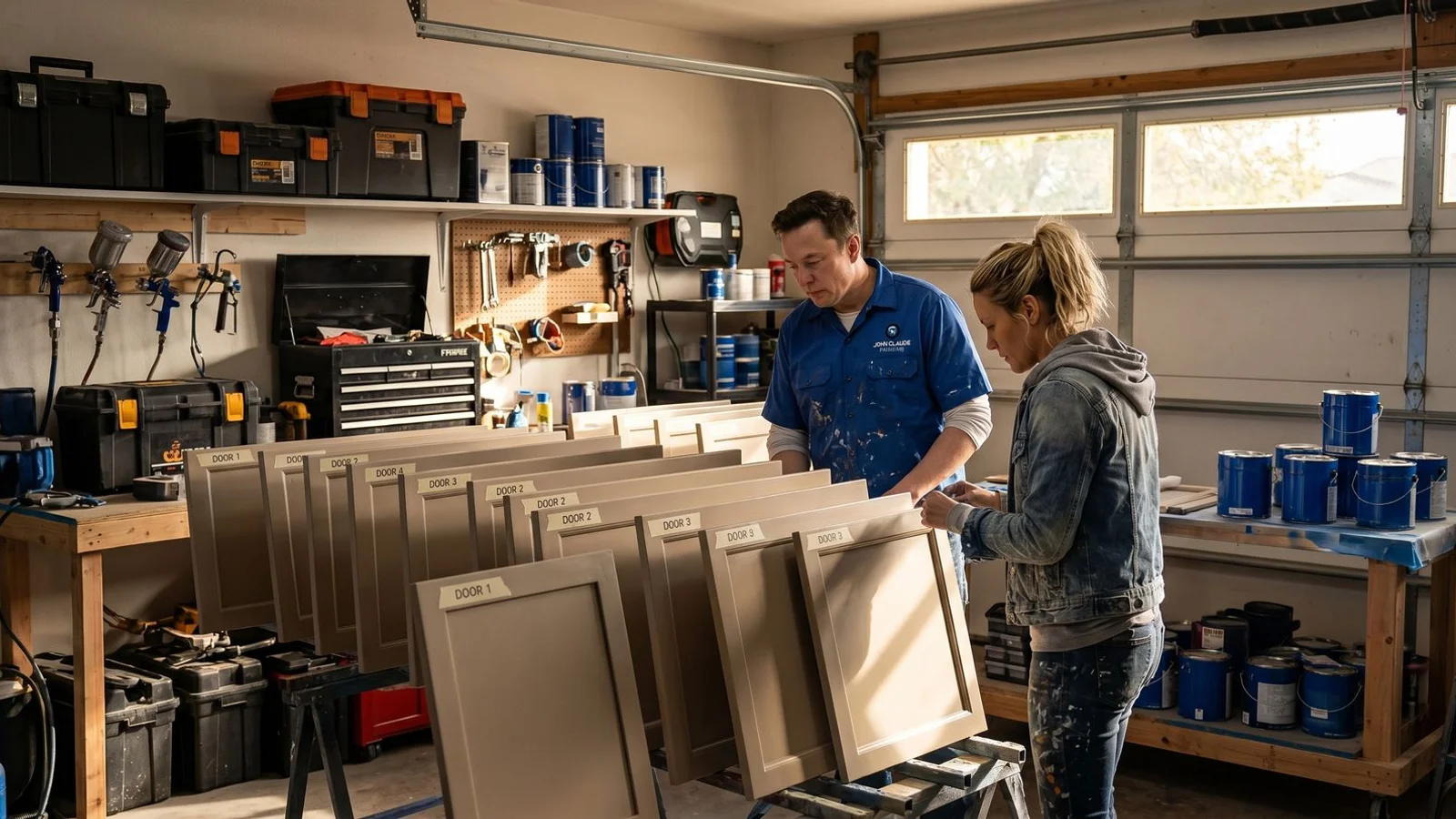
We at John Claude Painting often see homeowners caught off guard by just how disruptive a proper kitchen update can be.
The reality is that the dividing line between a standard refresh and a premium factory finish is the exact cabinet painting timeline. Our professional painting solutions are centered on reliability, which means a fast three-day turnaround usually involves skipped prep work, while a structured five-to-seven-day schedule allows for critical bonding phases.
Let’s look at the data behind the daily schedule and explore the practical steps you can take to keep your household running smoothly during the process.
What is the In-Place Cabinet Painting Timeline? (Standard, 3 to 5 Days)
An in-place refinish typically takes three to five days, with the kitchen wrapped in containment while the frames are prepped and sprayed right in your home. We rely on fast-drying, urethane-modified alkyds like Sherwin-Williams Emerald Urethane Trim Enamel to speed up this timeline without sacrificing durability. The dry Phoenix Valley climate, which often hovers around 30% indoor humidity, helps these waterborne products dry to the touch in just two hours.
Our painters still enforce a strict four-to-six-hour curing window between coats to ensure the finish hardens properly. This required drying time is exactly why the cabinet refinish duration spans nearly a full work week. We map hinge positions specifically during the initial breakdown because reinstalling a door even a fraction of an inch off-center creates friction that ruins fresh paint instantly.
This simple labeling step prevents the newly sprayed doors from rubbing against the frames. Our standard daily schedule for an in-home project follows a strict progression to keep the job on track. Here is exactly what happens each day.
| Day | Phase | Action Steps |
|---|---|---|
| Day 1 | Remove and Label | Remove every door and drawer front, label with cabinet map, wrap kitchen in plastic, and TSP clean all surfaces. |
| Day 2 | Prep and Prime | Sand all surfaces, fill nail holes, apply bonding primer, and prime doors in the garage. |
| Day 3 | First Topcoat | Light sand over primer, spray first coat of cabinet-grade topcoat, and let cure 4 to 6 hours. |
| Day 4 | Second Topcoat | Apply second coat and enforce a strict 24-hour cure before handling. |
| Day 5 | Reinstall and Punch | Reinstall doors, adjust hinges perfectly, reset hardware, and complete the final walkthrough. |
How Long Does a Shop-Spray Take? (Premium, 5 to 7 Days)
A premium shop-spray project takes five to seven days, exchanging two extra days of waiting for a superior, glass-like finish and zero spray containment inside your house. We prefer moving doors to a dedicated, climate-controlled shop because it allows us to safely apply two-part primers with hardeners. These specialized industry coatings cure into a much harder shell than standard air-dry paints, providing maximum protection against daily kitchen wear.
Our facility utilizes High Volume Low Pressure (HVLP) spray systems in a controlled booth to eliminate the micro-dust settling that frequently ruins garage-based paint jobs. The timeline expands to a full seven days because applying multiple coats of slower-leveling products like Benjamin Moore Advance requires an overnight dry time of up to 16 hours per coat.
We find this trade-off worthwhile for homeowners who want the absolute smoothest surface possible. Smaller 10-to-15 piece layouts might finish on the shorter end, while extensive 30-plus piece kitchens will stretch the timeline to the maximum.
- Day 1: Remove and label all doors, drawers, and hardware.
- Days 2 to 5: Sand, prime, and spray doors in our professional spray booth.
- Day 6: Safely transport the cured pieces back to the home for reinstallation.
- Day 7: Complete final adjustments and the project punch list.
What You’ll Experience During the Process
You will experience limited kitchen access, temporary plastic containment, and a mild paint odor for at least two to three days while the base cabinets are sprayed. We use heavy-duty 3-mil painter’s plastic to build floor-to-ceiling zip-wall enclosures. This physical barrier seals off the rest of your home from microscopic sanding dust and overspray.
Our crews run HEPA filtration units that vent outside to keep the indoor air quality safe during the spray phases. Modern waterborne alkyds are low-VOC, but technical data sheets confirm they still produce a noticeable smell that lingers for the first 24 to 48 hours.
- Containment: Floor-to-ceiling plastic closures around the entire kitchen.
- Ventilation: HEPA filtration venting safely outside.
- Exhaust fans: Active during all spray phases to clear the air.
- Odor: Mild smell for 24 to 48 hours as the product dries.
We normally bring the upper cabinets back online before the lower sections. Lower cabinets require more extensive masking around countertops, dishwashers, and ovens, making them the last areas to be uncovered.
Our technicians will also clean and reuse your existing hardware, or install brand new pulls depending on your preference. The entire space will function like a construction zone, so setting expectations is critical for a smooth week.
How to Plan Your Meals
Plan to eat takeout or microwaveable meals for at least 72 hours, as your stove and sink will be entirely sealed off during the prep and spray phases. We highly recommend stocking a large Yeti or Coleman cooler with prepped food, since your refrigerator will likely be wrapped in protective plastic to prevent overspray.
Setting up a makeshift coffee and toaster station in the dining room keeps your morning routine intact. Our past clients often suggest placing this temporary station on a different electrical circuit than the kitchen. Running high-draw appliances on an extension cord from the living room frequently trips breakers while the painting equipment is active.
We know dining out for three days gets expensive, so preparing cold cuts and salads in advance saves money. Upper cabinets holding plates and glasses typically become accessible again by the second or third day.
- Stock a cooler with two to three days of prepped, easily accessible food.
- Move your coffee maker and toaster to a dining table or living room surface.
- Plan on takeout for evening meals during the base-cabinet downtime.
- Access upper cabinets safely once the initial masking comes down.
What is the Cure Time After Reinstall?
Fresh cabinet paint feels dry immediately, but the chemical cross-linking process takes a full 14 to 30 days to reach maximum hardness. We apply small, clear felt bumper pads to the corners of your doors right after reinstallation. This simple insider trick prevents the fresh paint on the door from sticking to the newly painted cabinet frame, a common issue known in the industry as “blocking.”
Our team always tells clients to treat their kitchen gently for the first month. You must avoid harsh chemical cleaners, slamming doors, or hanging heavy hooks over the cabinet faces during this 30-day window.
- First 14 Days: Avoid harsh chemical cleaners and heavy scrubbing.
- First 30 Days: Keep stickers, heavy hooks, and damp towels off the doors.
- Long-Term: Use mild soap and water for routine maintenance.
We use the standard “thumbnail test” to evaluate the finish. If you can gently press a thumbnail into an inconspicuous edge and leave a temporary mark, the urethane is still curing and remains vulnerable to scratches.
Our goal is to ensure your investment lasts, so patience during this final phase is essential. Understanding your exact cabinet painting timeline helps you prepare for the temporary disruption.
We encourage you to review our cabinet painting service for scoping your specific kitchen, and read our guide on will painted cabinets hold up long-term for post-job care expectations.
Quick Answers
How many days is a typical cabinet refinish?
3-5 days for a standard kitchen in-place; 5-7 days if we spray doors in our shop and bring them back.
Can I use my kitchen during cabinet painting?
Partially. Plan for a 2-3 day stretch without base cabinets; uppers come back online earlier.
What's the mess level on-site?
Low. We contain the work area with plastic and filter the exhaust. You'll see taped zones, not airborne dust.
Keep Reading
Best Paint and Finish for Kitchen Cabinets
Cabinet-grade paint chemistry and sheen explained — SW Emerald Urethane, BM Adva...
Cabinet Painting Cost in Arizona
Cabinet painting prices in Arizona per door and per linear foot, plus the uplift...
Cabinet Painting vs Refacing vs Full Replacement
The three-way cabinet decision honestly compared — cost deltas, lifespan, and wh...
Will Painted Cabinets Chip, Peel, or Hold Up Long-Term?
The real reasons painted cabinets fail — and what proper prep, bonding primer, a...
Need a Real Estimate?
We'll walk your property and write a scoped proposal within 24 hours — no cost, no obligation.