
Best Paint and Finish for Kitchen Cabinets
Cabinet-grade paint chemistry and sheen explained — SW Emerald Urethane, BM Advance, and what actually survives daily kitchen use.
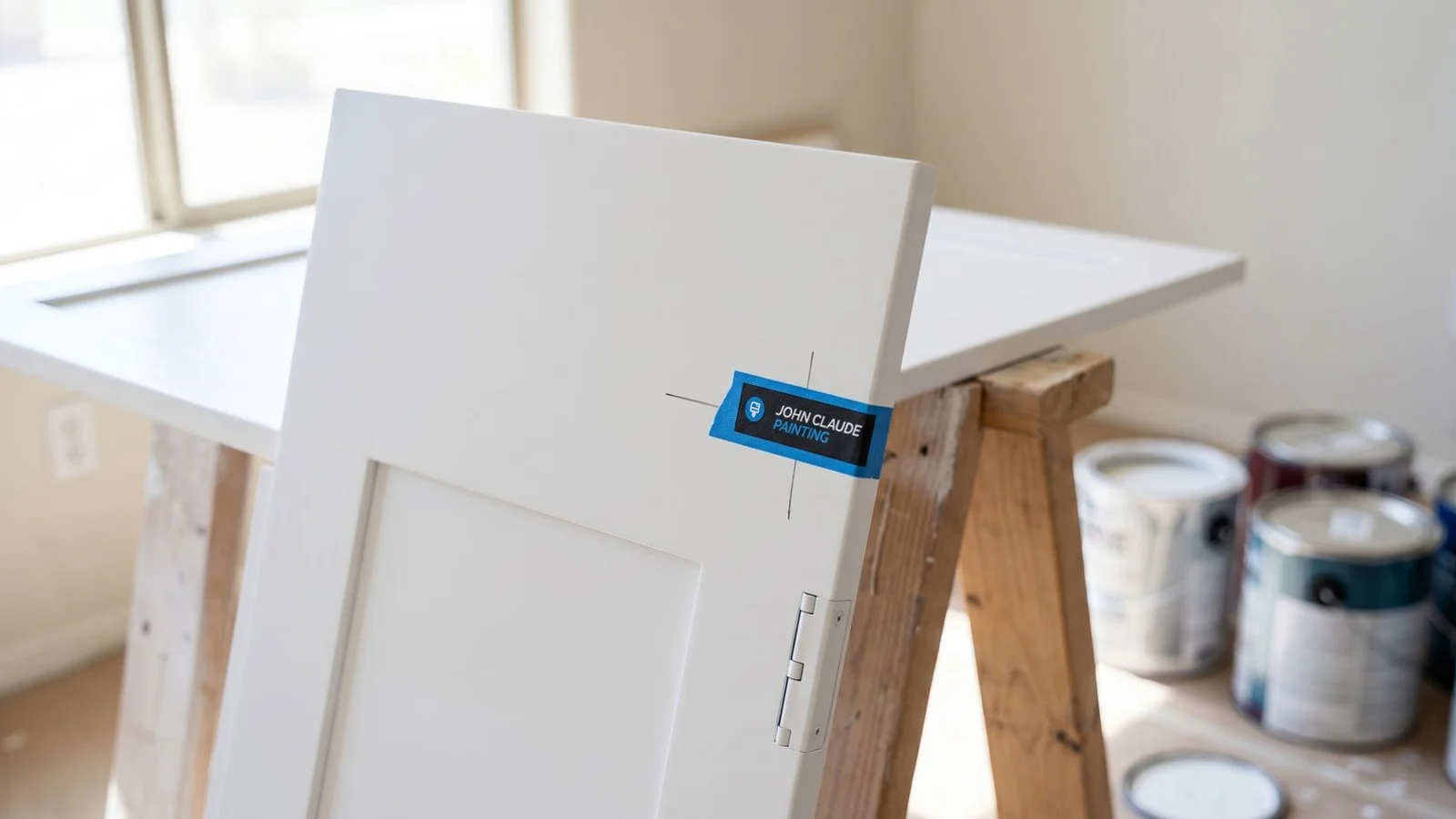
We know how fast a busy Arizona kitchen can destroy a standard paint job. The relentless heat and constant hand contact make kitchen cabinets the most vulnerable surface in your home.
Our experience shows that finding the best paint for kitchen cabinets means looking past standard wall formulas. You need a coating designed specifically to handle grease, heat, and heavy daily use.
This guide breaks down the exact alkyd waterborne cabinet paint chemistry required for a lasting finish.
We have tested dozens of commercial finishes to separate marketing claims from real-world results. Let’s look at the science of cabinet coatings, compare top professional options, and walk through the exact steps to protect your investment.
Cabinet-Grade Paint Chemistry
Cabinets need a harder cure than wall paint to resist fingerprints, mild cleaners, and daily door contact. The industry standard category for this durability is alkyd-modified waterborne paint.
Our preferred waterborne alkyd formulas deliver the leveling power of traditional oil paint without the lingering toxic fumes. These modern hybrids comply with strict 2026 indoor air quality standards, keeping Volatile Organic Compounds (VOCs) below 50 grams per liter.
This low-VOC profile is a massive benefit in Phoenix, where air conditioning circulates the same indoor air for months at a time.
You gain several clear advantages when choosing a cabinet paint finish with this chemistry:
- Safer air quality: Lower VOCs mean you can comfortably stay in your home during the project.
- Superior leveling: The paint settles flat to eliminate brush or spray marks.
- Enhanced durability: A fully cured alkyd-waterborne finish is up to ten times more scratch-resistant than standard acrylic latex.
- Non-yellowing finish: Older oil-based enamels turn yellow, but waterborne hybrids keep white cabinets looking crisp.
The Three Lines We Spec
We rely on three specific products to achieve a flawless, factory-like finish on every project. Each option offers unique benefits depending on your application method and the specific demands of your kitchen.
Our primary recommendation is Sherwin-Williams Emerald Urethane Trim Enamel, which dries to the touch in one to four hours for efficient spray applications. You must wait a full 16 to 24 hours before applying a second coat, even in our dry Arizona climate. For brush-and-roll projects, Benjamin Moore Advance is an exceptional choice featuring a slower drying time that levels out perfectly.
We often specify Insl-X Cabinet Coat for lower-traffic areas like guest bathrooms or laundry rooms. This value-driven urethane-acrylic blend provides excellent adhesion and a smooth finish. It dries quickly but does not offer the same heavy-duty impact resistance as our top two choices.
| Product Name | Best Application Method | Recoat Time | Full Cure Time |
|---|---|---|---|
| Sherwin-Williams Emerald Urethane | HVLP Spray | 16-24 Hours | 7-30 Days |
| Benjamin Moore Advance | Brush and Roll | 16 Hours | 30 Days |
| Insl-X Cabinet Coat | Brush, Roll, or Spray | 6 Hours | 14 Days |
Sheen Choice
Selecting the right sheen impacts both the durability and the visual appeal of your cabinets. Glossy surfaces wipe down easily, but they also highlight every minor surface imperfection and fingerprint.
Satin Finishes
We apply a satin finish on the majority of our Phoenix kitchen projects. This softer sheen provides a modern aesthetic while remaining forgiving on older doors with minor dings. A satin finish offers an excellent balance, reflecting enough light to brighten the room while maintaining solid washability.
Semi-Gloss Finishes
For maximum durability against cooking grease and heavy scrubbing, semi-gloss is the traditional industry standard. This highly reflective option creates a slick surface that resists moisture beautifully. You will notice that a semi-gloss sheen sharply highlights the architectural details of your door styles.
Pearl or Low-Sheen Finishes
Our team rarely specifies pearl or matte finishes for kitchen cabinetry. Modern flat-panel European-style kitchens occasionally use low-sheen paints, but these softer finishes simply do not hold up to rigorous daily cleaning.
Most local kitchens utilize a satin finish on the exterior doors alongside a semi-gloss finish on the interior trim. Both choices provide reliable, long-lasting protection when applied correctly.
Primers Matter More Than Paint
The most common cabinet-paint failures come from skipped primer. A high-quality alkyd waterborne cabinet paint cannot bond directly to a slick, dirty, or unprepared surface.
Our painting crews see disastrous peeling when homeowners skip the vital step of surface preparation. You must match the specific primer to your exact cabinet material to guarantee adhesion.
- Slick substrates (laminate, thermofoil): These require a dedicated bonding primer like Zinsser Stix or INSL-X Prime Lock. This specific primer requires a full three to four days to cure before reaching its maximum scrape resistance, so do not perform a “scratch test” after just one hour.
- Bare wood or MDF: These porous materials require a dedicated wood primer coat to seal the surface.
- Painted wood: You need to scuff-sand the surface and apply a bonding primer, or apply directly depending on the existing finish.
- Oak grain and heavy stains: Use a grain-fill primer to embrace or hide the texture. For deep stains or smoke damage, a shellac-based option like Zinsser B-I-N is required because it dries in 45 minutes and completely blocks tannin bleed.
See painting oak, laminate, and thermofoil cabinets for substrate-specific recipes.
Cure Time (Critical)
There is a massive difference between paint feeling dry to the touch and paint being fully cured. Most cabinet paint damage happens in the first few weeks because homeowners treat dry paint like cured paint.
We tell every client that their new finish remains soft and vulnerable beneath the surface for up to a month. Water-based cabinet paints often dry in just a few hours, but the chemical cross-linking process takes weeks to solidify.
The extreme dry heat in Phoenix can sometimes dry the top layer of paint too rapidly, which traps moisture underneath and extends the deep curing process. For optimal curing, you should try to maintain an indoor temperature around 72 degrees Fahrenheit with 40 to 50 percent humidity.
The Standard Curing Timeline
- Dry-to-touch: 1 to 2 hours
- Dry-to-recoat: 4 to 24 hours (depending on the brand)
- Dry-to-reinstall: 24 to 48 hours
- Full cure (maximum hardness): 14 to 30 days
During the curing phase, the finish is still hardening. Be gentle with doors for the first two weeks.
- Do not slam doors or drawers.
- Do not hang heavy items on hooks yet.
- Do not scrub marks off, just gently blot them with water.
- Avoid harsh chemical cleaners until the full 30-day cure is complete.
What Not to Use
A professional kitchen cabinet painting in Phoenix costs between $2,000 and $5,000 on average in 2026. Trying to cut corners with the wrong products is an expensive mistake that will force you to pay for a complete chemical stripping and refinishing job later.
Our experts strongly advise against using any of the following products on your kitchen cabinetry.
- Standard wall paint (any sheen): Acrylic latex wall formulas never cure hard enough to withstand kitchen traffic and will peel quickly.
- Cheap drywall primer as a topcoat: These budget primers will chalk, easily absorb grease, and turn yellow over time.
- Traditional oil-based paint in an occupied home: Older oil formulas emit harsh, dangerous VOC fumes for weeks and will eventually yellow.
- Chalk paint: While popular for craft projects, chalk paint requires a full month to cure and needs constant, tedious wax sealing to survive a kitchen environment.
- Single-coat applications: Skipping the second coat severely compromises both the color coverage and the overall durability of the finish.
See our cabinet painting service for the full spec we use, and will painted cabinets hold up long-term for durability expectations.
Final Thoughts on Cabinet Painting
We consider proper product selection to be the foundation of any successful kitchen update. Taking the time to choose the best paint for kitchen cabinets will save you thousands of dollars in premature repairs.
Your newly painted surfaces will easily handle the demands of a busy household if you respect the prep work and the curing process.
Reach out to a local professional if you need help assessing your cabinets for a lasting, beautiful transformation.
Quick Answers
Is satin or semi-gloss better for kitchen cabinets?
Semi-gloss for maximum washability; satin for softer look on modern kitchens. Both survive daily cleaning with the right topcoat.
Why can't I use wall paint on cabinets?
Wall paint doesn't cure hard enough to survive hand-wear on doors and drawer fronts — it'll scuff and fingerprint within months.
What's cure time for cabinet paint?
Dry in hours but 14-30 days for full cure. Be gentle with doors for the first two weeks.
Keep Reading
Cabinet Painting Cost in Arizona
Cabinet painting prices in Arizona per door and per linear foot, plus the uplift...
Cabinet Painting Timeline and What to Expect During the Job
The 3-7 day disruption of a cabinet repaint — door removal, spray booth, cure ti...
Cabinet Painting vs Refacing vs Full Replacement
The three-way cabinet decision honestly compared — cost deltas, lifespan, and wh...
Will Painted Cabinets Chip, Peel, or Hold Up Long-Term?
The real reasons painted cabinets fail — and what proper prep, bonding primer, a...
Need a Real Estimate?
We'll walk your property and write a scoped proposal within 24 hours — no cost, no obligation.