
Painting Oak, Laminate, and Thermofoil Cabinets
Substrate-specific cabinet painting: oak grain fill, laminate bonding primer, thermofoil separation risk, MDF edge swelling. Real recipes.
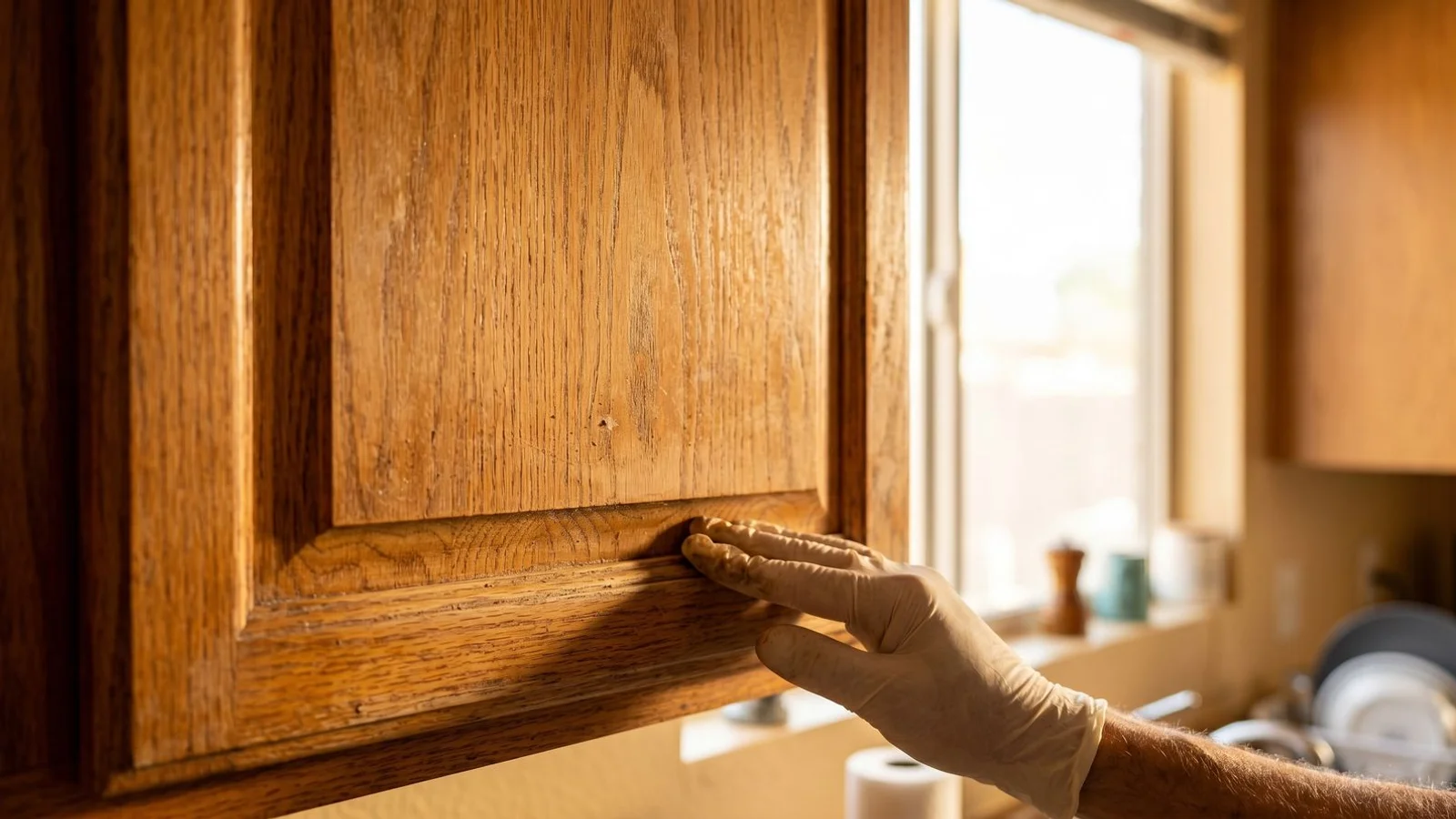
We have seen a lot of failing cabinet paint jobs across the Phoenix Valley over the years. Getting the prep wrong on different substrates guarantees the paint will peel, usually within three to twelve months.
Heat and low humidity add unique challenges to the application process.
Our team uses this exact recipe for every common cabinet material found in local homes. This guide breaks down the right approach for your project.
Oak
When you paint oak cabinets, dealing with the deep, open grain is your primary challenge. Phoenix is filled with 1980s and 1990s homes featuring these heavily textured doors. Our team uses a specific process to either hide or highlight this natural wood texture. You have two distinct paths to choose from based on your preferred style.
Modern painted look (no visible grain):
- Sand the surface thoroughly with 150-grit paper.
- Apply a high-quality grain-filler paste like Aqua Coat, squeegeeing it flush.
- Sand the surface flush once the filler is completely dry.
- Skim-coat lightly with joint compound if any deep pores remain.
- Apply a strong bonding primer.
- Finish with two coats of a premium cabinet-grade topcoat.
Traditional look (grain visible):
- Sand with 220-grit paper to scuff the existing finish.
- Apply your bonding primer.
- Spray two coats of a cabinet-grade topcoat.
A proper grain-fill application requires precision and patience. Using a water-based filler like Aqua Coat adds about one to two days to the overall project schedule. Expect this intensive process to add $20 to $40 per door to your total cost.
Laminate
The secret to painting laminate cabinets is establishing a mechanical profile and using an extreme-bonding primer. Kitchens built in the late 1980s and 1990s frequently feature laminate faces, which are essentially plastic-coated particleboard. Our crews never skip the adhesion test on these slick surfaces. This material is highly paintable if you follow strict preparation guidelines.
- Clean thoroughly with TSP (Trisodium Phosphate) to dissolve stubborn grease.
- Sand aggressively with 220-grit paper to create a mechanical profile.
- Wipe the entire surface clean with a damp microfiber cloth.
- Adhesion test: Apply bonding primer in a hidden spot, let it cure for 24 hours, and try to scratch it off. If the primer peels, the laminate is too slick.
- Apply a full coat of Zinsser Stix or INSL-X Prime Lock.
- Finish with two coats of a durable cabinet topcoat.
Textured plastic laminates with a melamine face bond well, but they often show more sheen variation. Zinsser Stix is particularly effective here because it cures to a tough film that grips slick plastics.
You must let these specialty primers cure for the full recommended time before topcoating. Rushing this step in our dry climate is a common mistake that leads to instant peeling.
Thermofoil
To paint thermofoil cabinets successfully, you must identify high-heat risk zones before opening a single can. Thermofoil is simply an MDF cabinet door wrapped in heat-sealed vinyl, common in many builder-grade homes. We strongly recommend evaluating the location of each door before deciding to apply a coating. Heat cycles cause the vinyl to detach from the wood base underneath.
Safe zones (bathrooms, pantry, low-heat kitchen areas):
- Clean heavily with a TSP substitute.
- Scuff-sand gently with 220-grit paper.
- Apply a specialized bonding primer.
- Finish with two coats of your chosen topcoat.
High-heat zones (near stove, dishwasher, oven):
- Thermofoil typically delaminates from the MDF substrate when exposed to temperatures above 130 degrees Fahrenheit.
- Adding a fresh layer of paint alters the thermal profile and accelerates this peeling process.
- Replacing these specific doors is a much smarter investment than attempting to paint them.
A recent industry review noted that nearly 60% of painted thermofoil failures happen directly above dishwashers and stoves. The moisture from the dishwasher vent is just as damaging as the heat radiating from the oven.
MDF
Preventing edge swelling is the absolute most critical step when preparing MDF. While the flat faces of MDF accept paint beautifully, the porous edges absorb water-based primers like a sponge. Our standard procedure blocks this moisture completely using specialized products. Skipping this step leaves you with swollen corners and a rough, unprofessional finish.
- Seal all raw edges first with an alcohol-based, shellac primer like Zinsser BIN. Apply 2 coats.
- Sand the edges perfectly smooth once the shellac is sealed and dry (usually within 45 minutes).
- Spray a full coat of standard bonding primer on all faces and edges.
- Apply two coats of your final topcoat.
Zinsser BIN uses an alcohol base that evaporates rapidly instead of soaking into the compressed wood fibers. This product is a staple in professional shops because it creates an impenetrable barrier against water. Water-based primers simply ruin raw MDF edges.
Painted Wood (Repaint Over Existing Paint)
Thorough cleaning and scuff-sanding are all you need when repainting existing painted wood that is still structurally sound. This is the most common cabinet scenario encountered in the field. Our painters inspect the current coating closely to ensure it is actually bonded to the wood. You only need a full coat of primer if the old paint is failing.
- Clean the entire surface with a heavy-duty degreaser like TSP.
- Scuff-sand everything thoroughly using 180-grit sandpaper.
- Spot-prime any chipped, bare, or heavily worn areas.
- Spray two fresh coats of your new topcoat.
Using a high-quality abrasive like 3M Pro Grade 180-grit ensures you create the right micro-scratches without tearing through the old finish. The goal is to dull the old sheen, not strip the wood bare. Skipping a full primer coat saves substantial time and money as long as the foundation is solid.
See our cabinet painting service for substrate-specific quoting, and check out our guide on the best paint and finish for kitchen cabinets to help with your final product choice.
Quick Answers
Can you really paint laminate cabinets?
Yes with the right bonding primer (Stix, Extreme Bond) and adhesion testing. Mechanical abrasion is essential.
Should I fill the oak grain before painting?
Depends on style. Modern look — fill. Traditional look — leave grain visible. Fill requires extra skim coats.
Is painting thermofoil cabinets risky?
Yes around stoves and dishwashers where heat causes delamination. Cooler zones paint fine with bonding primer.
Keep Reading
Best Paint and Finish for Kitchen Cabinets
Cabinet-grade paint chemistry and sheen explained — SW Emerald Urethane, BM Adva...
Cabinet Painting Cost in Arizona
Cabinet painting prices in Arizona per door and per linear foot, plus the uplift...
Cabinet Painting Timeline and What to Expect During the Job
The 3-7 day disruption of a cabinet repaint — door removal, spray booth, cure ti...
Cabinet Painting vs Refacing vs Full Replacement
The three-way cabinet decision honestly compared — cost deltas, lifespan, and wh...
Need a Real Estimate?
We'll walk your property and write a scoped proposal within 24 hours — no cost, no obligation.