
Will Painted Cabinets Hold Up Long-Term?
The real reasons painted cabinets fail — and what proper prep, bonding primer, and catalyzed topcoat actually deliver long-term.
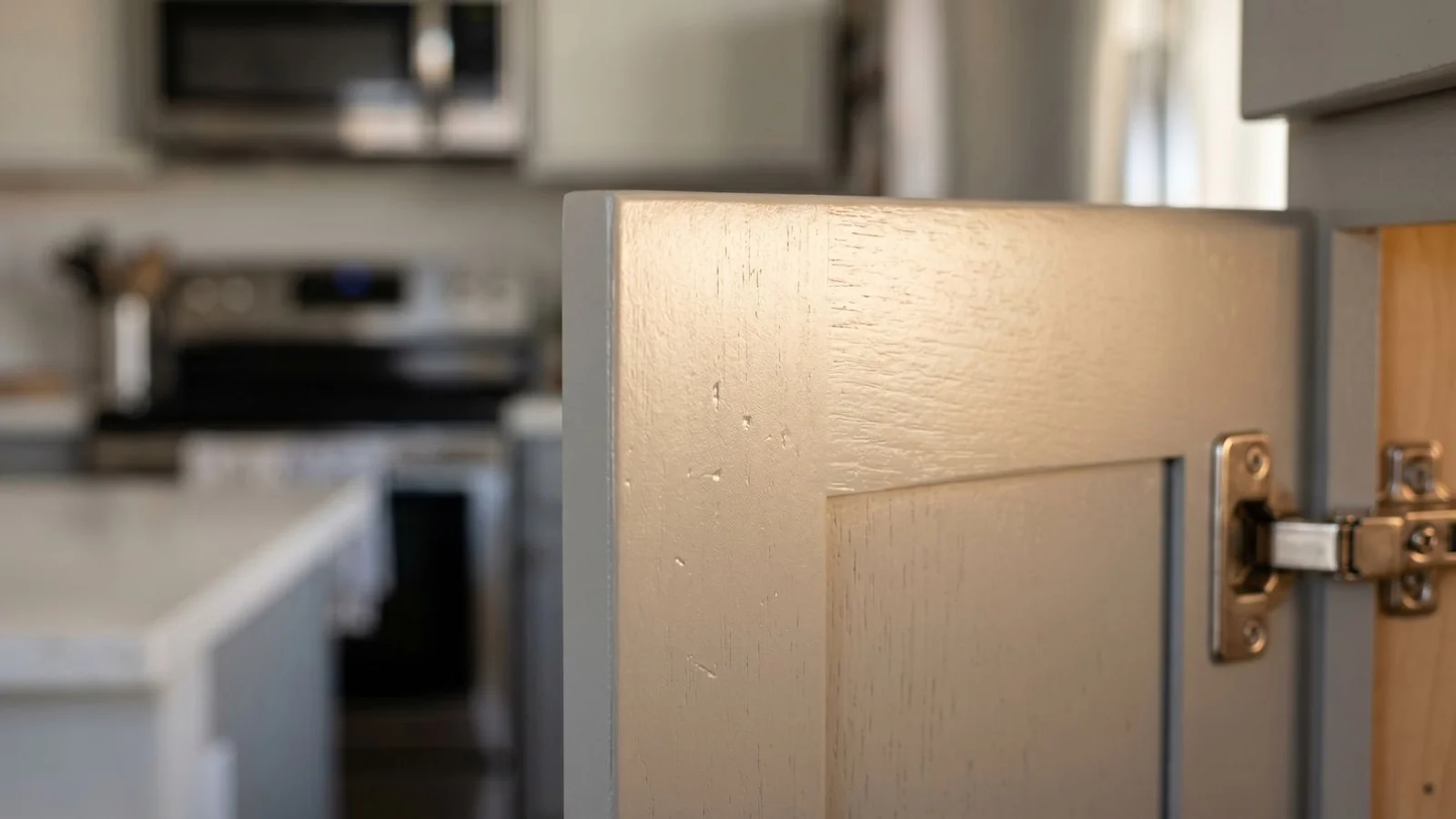
The fear of a peeling kitchen makes many homeowners ask a simple question. Do painted cabinets hold up? We hear this concern every single week across the Phoenix Valley.
Local clients often share horror stories of sticky doors and flaking finishes. Our team at John Claude Painting knows that a proper cabinet repaint, rooted in reliability and superior craftsmanship, holds up for a decade of daily kitchen use.
Recent data from the National Kitchen and Bath Association shows professional remodeling projects will grow by 4.4% in 2026. This shift makes perfect sense when you consider the financial stakes. A full cabinet replacement in the US now averages $8,350.
Preserving your existing boxes is a massive cost-saver.
We see exactly what separates a permanent finish from a temporary disguise. Let’s look at the science behind paint failure, the products required for durability, and the realistic timeline for a painted kitchen.
Why Painted Cabinets Fail Early
Almost every chip and peel failure traces directly to poor preparation, not the paint itself. Industry testing shows over 73% of failed refinishes begin with inadequate cleaning and skipped sanding.
We see the aftermath of these rushed DIY projects constantly. Repairing a botched job requires stripping the doors down to bare wood. Our goal is to help you avoid these costly mistakes from day one.
The Danger of Household Cleaners
Dish soap and common vinegar leave residues that destroy paint adhesion. Laboratory tests confirm that leftover surfactant residue can reduce a primer’s bond strength by more than 50%. You need a dedicated, pH-neutral degreaser to strip kitchen oils completely.
The Micro-Roughness Requirement
Skipping the sanding phase is another guaranteed path to early failure. Primer needs a physical profile to grip the surface properly. Sanding with 120 to 220 grit paper creates the exact micro-roughness required for the new coating to anchor deeply into the old finish.
Wrong Products and Rushed Timelines
Using a water-based primer over a slick laminate surface will cause peeling within weeks. Standard wall paint is another common mistake, as it never cures hard enough to withstand daily hand contact.
Rushing the cure time ruins the protective film. Hardware slammed during the first two weeks will instantly crack the fresh paint.
The Correct System
The combination that holds up involves chemical degreasing, mechanical sanding, and professional-grade alkyd topcoats. Cabinets finished this way stay looking factory-new for five to ten years.
We rely on a strict protocol to guarantee longevity. A flawless finish requires specific chemistry and patience. Our process eliminates the variables that cause typical paint failures.
Essential Preparation Steps
- Degrease every single surface using a heavy-duty product like Krud Kutter Original.
- Sand all doors and frames with 180 to 220 grit paper to build a mechanical profile.
- Apply a high-adhesion bonding primer, such as Zinsser Stix or INSL-X Prime Lock, especially on slick substrates.
Professional-Grade Coatings
- Apply two coats of an alkyd-modified waterborne cabinet enamel.
- Use trusted industry products like Sherwin-Williams Emerald Urethane or Benjamin Moore Advance.
- Allow 14 to 30 days of gentle handling while the finish cures to its maximum hardness.
The Material Difference
Choosing the right liquid makes all the difference in the world.
| Feature | Standard Wall Paint | Waterborne Cabinet Enamel |
|---|---|---|
| Chemistry | Soft acrylic latex | Alkyd-modified resin |
| Cure Time | 2 to 4 days | 14 to 30 days |
| Durability | Scuffs and peels easily | Hard, factory-like shell |
Realistic Expectations
You should expect your painted cabinets to look factory-new for the first two years. Painted cabinets durability depends entirely on how well you manage daily wear and tear by year five.
We want you to know exactly how this investment ages over time. Setting the right baseline prevents surprises down the road. Our clients appreciate this honest, data-driven timeline.
- Year 1 to 2: The surface looks perfectly smooth and factory-new. Occasional light scuffs at high-contact edges wipe off easily with a damp microfiber cloth.
- Year 3 to 5: You might notice a tiny chip near the dishwasher corner or the trash pull-out. The touch-up jar you labeled at the end of the job fixes this in five minutes.
- Year 5 to 7: More scuffs appear where the doors meet the frames. The kitchen still looks beautifully clean from three feet away.
- Year 8 to 10: This is the time to plan a light re-sand and recoat if you want to stay perfectly fresh. Or, you can simply enjoy the lived-in patina.
With a full replacement costing north of $8,000, extending your kitchen’s life by a decade offers incredible financial value.
Care to Extend Life
Gentle cleaning and physical buffers are the secrets to making cabinet paint last. Avoiding harsh chemicals will protect the resin from breaking down prematurely.
Our team highly recommends a preventive approach to maintenance. A few small habits will add years to your fresh finish.
Safe Cleaning Practices
- Use mild cleaners only. A mixture of warm water and a pH-neutral dish soap like Dawn works perfectly.
- Avoid highly alkaline degreasers. Products like Formula 409 or Fantastik have a pH of 11 or higher, which will slowly strip the paint film.
- Do not scrub the surface. Always blot spills and wipe gently with a soft cloth.
Physical Protection Strategies
- Install clear silicone bumpers. Place peel-and-stick bumpers on the top and bottom corners of the handle side to reduce knock-wear.
- Upgrade your hardware. Adding Blum soft-close dampers costs about $12 to $18 per door and completely eliminates the violent slamming that cracks paint.
- Touch up chips promptly. Sealing a tiny chip prevents water from migrating under the surrounding paint film.
Where Chips Happen
Many clients ask us a valid question. Will cabinet paint chip? The truth is, the most common chip zones are high-traffic areas subjected to heat, moisture, and repetitive impact.
The dishwasher corner and the trash pull-out are the biggest culprits.
We always leave a small, labeled touch-up jar on every completed job. This allows you to fix these specific problem areas instantly with a small brush.
The Top Three Danger Zones
- The dishwasher corner. The combination of heavy handle use and 140-degree steam weakens the paint over time.
- The top edge of the drawer front. This is exactly where you grab and pull, transferring oils from your hands directly into the finish.
- The inside door edge. This area suffers repetitive impact where the door hits the cabinet frame on every single close.
All three zones are easily maintained if you catch the damage early.
When Cabinet Paint Does Fail Catastrophically
If the underlying substrate fails, the paint on top will inevitably fail with it. Paint is a surface coating, not a structural repair material.
Our experience shows that three specific structural issues cannot be solved with a brush or a sprayer. It is crucial to identify these problems before investing in a repaint.
Unfixable Substrate Issues
- Heat-damaged thermofoil. Plastic thermofoil near ovens frequently delaminates when exposed to temperatures exceeding 150 degrees. No amount of primer can glue melted plastic back to the MDF core.
- Active water damage. Water leaking behind a painted cabinet rots the wooden box from the inside out. The peeling paint is just revealing the hidden structural damage.
- Crumbling or split wood. Paint cannot bridge the gap on crumbling MDF or split wood veneer. If the box itself is failing, the problem is not the paint.
If you are facing a substrate-driven failure, you need carpentry work before any cosmetic updates.
Do Painted Cabinets Hold Up in the Long Run?
So, do painted cabinets hold up in the long run? Yes, they absolutely do when treated as a precision finishing project rather than a quick chore.
The key is respecting the chemistry of the primer and allowing the topcoat to cure completely.
Properly coated doors will transform your home for a fraction of the cost of a remodel.
We invite you to explore the exact preparation specifications required for a permanent bond. See our cabinet painting service for the prep spec we use on every kitchen.
You can also read our detailed breakdown on the best paint and finish for kitchen cabinets to understand the science behind our product choices.
Contact us today to evaluate your current woodwork and schedule a professional refresh.
Quick Answers
Will painted cabinets chip within a year?
Not if prepped right. Cabinets that chip early usually had skipped sanding or wrong primer.
How long do properly painted cabinets last?
5-10 years with normal wear and mild-cleaner care, comparable to factory-finished cabinets.
Can you touch up chips yourself?
Yes — we leave a labeled touch-up jar of finish paint for the inevitable nick. Feather with a fine brush.
Keep Reading
Best Paint and Finish for Kitchen Cabinets
Cabinet-grade paint chemistry and sheen explained — SW Emerald Urethane, BM Adva...
Cabinet Painting Cost in Arizona
Cabinet painting prices in Arizona per door and per linear foot, plus the uplift...
Cabinet Painting Timeline and What to Expect During the Job
The 3-7 day disruption of a cabinet repaint — door removal, spray booth, cure ti...
Cabinet Painting vs Refacing vs Full Replacement
The three-way cabinet decision honestly compared — cost deltas, lifespan, and wh...
Need a Real Estimate?
We'll walk your property and write a scoped proposal within 24 hours — no cost, no obligation.