
How to Strip and Sand Cabinets Before Painting
Field-tested strip and sand sequence for kitchen cabinets in Phoenix homes: when to strip, what grit to use, and how to avoid swirl marks and edge tear-out.
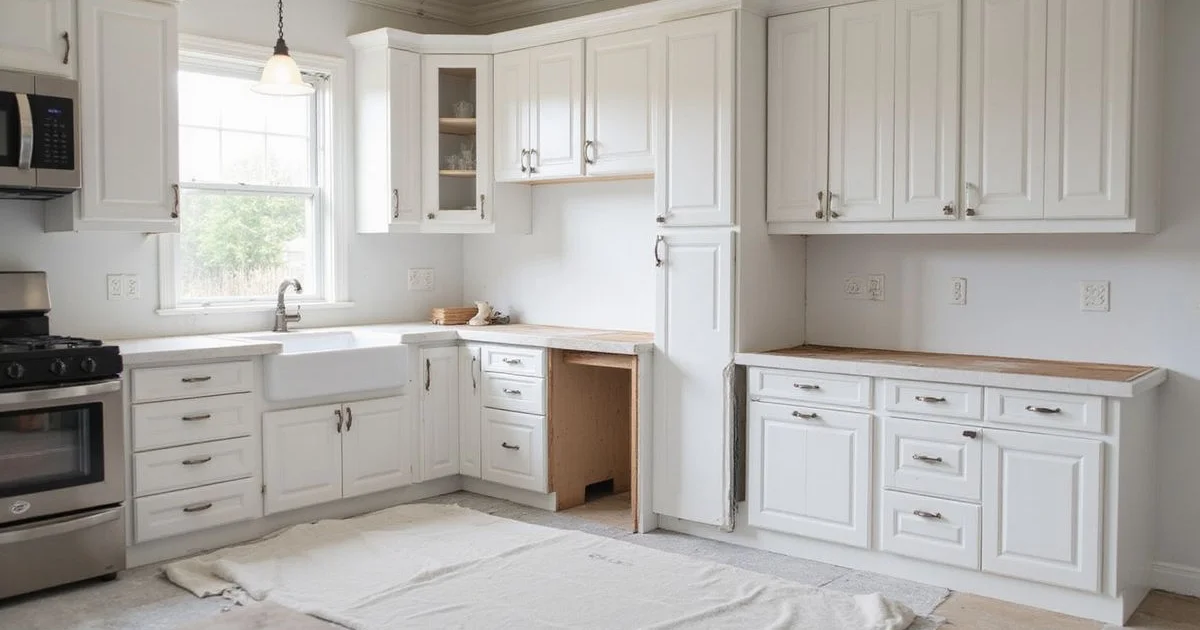
We consistently notice that surface preparation separates a flawless kitchen update from a peeling disaster.
Many homeowners underestimate how aggressively old finishes fight new paint. You can avoid hours of scraping by correctly assessing whether a full chemical strip is necessary.
Let us look at the specific conditions that dictate a heavy strip versus a simple scuff-sand. Learning the correct way to strip and sand cabinets before painting ensures your new finish will last.
Stripping and sanding cabinets, end to end
Our crews see countless Phoenix kitchens featuring heavy 1990s oak builds with deeply ingrained textures. These older cabinets almost always require a full chemical strip on the doors and a heavy scuff-sand on the wall-mounted boxes.
Stripping removes the thick, peeling, or heavily layered paint that blocks new primers from gripping the wood. Sanding alone only works when the existing factory coat is completely sound.
We target a microscopic bonding profile to lock the new topcoat in place.
Evaluating the Wood Grain
Oak grain presents a specific challenge because paint settles deep into the open pores. A basic surface sanding leaves these old paint pockets intact.
This creates an uneven texture under your fresh, modern finish. We use specialized techniques to level these surfaces completely. Heavy filling and aggressive sanding usually solve the problem.
When stripping is worth the extra day
Our standard process reserves stripping for specific, high-risk scenarios because it adds a full 24 hours to the project timeline. Skipping this step on compromised wood guarantees a failed topcoat and wasted effort.
Strip your cabinet doors when you see any of these indicators:
- Heavy kitchen grease lingers after a TSP (Trisodium Phosphate) wash.
- The old paint is blistering, peeling, or chipping near the edges.
- You spot three or more distinct paint layers near the hinge cuts.
- You are switching from an oil-based finish to a waterborne system.
- The home was built before 1978, requiring lead-safe practices.
The Dangers of Lead Paint
Homes built before 1978 present a serious health risk. The EPA estimates that 31 million older homes in the US still contain lead-based paint.
Sanding these surfaces releases hazardous dust into your living space. We strongly recommend testing older cabinets before doing any aggressive scraping. Safety should always dictate your approach.
Sand-only preparation is sufficient when:
- The surface has a single, sound coat of factory finish.
- You observe only light wear on flat panels and stile faces.
- The cabinets are under ten years old with a clean topcoat.
Tools and materials checklist
We stage everything before opening a single paint can. Running back to the hardware store mid-project quickly turns a straightforward Saturday job into a three-day ordeal.
Gather these items for your setup:
- Smart Strip Pro or Citristrip (water-based options)
- Heavy plastic scrapers and a metal putty knife
- Chemical-rated safety goggles and nitrile gloves
- Canvas drop cloths with protective plastic backing
- Clean rags and a bucket of TSP rinse solution
Why Product Selection Matters
Smart Strip Pro is an excellent choice for indoor residential work. This specific formula features a 5 percent VOC (Volatile Organic Compound) content according to the manufacturer’s technical data, eliminating the dangerous methylene chloride fumes found in older strippers.
Air quality matters immensely when working inside a home. We always prioritize low-toxicity products for interior jobs. Your health is just as important as the final finish.
| Tool or Material | Specific Purpose |
|---|---|
| Random orbital sander | Fast removal on flat box surfaces |
| 80, 120, and 220-grit discs | Sequential scratch refinement |
| 220-grit sanding sponges | Safe profiling on intricate molding |
| HEPA shop vacuum | Capturing fine dust at the source |
The chemical strip, step by step
Our team follows a strict sequence to show you exactly how to strip cabinet paint for consistent results. Mixing up doors during the reinstallation phase is the most common DIY mistake.
- Remove and map the pieces. Use painter’s tape to label every door and drawer, creating a numbered map taped to your wall.
- Remove all hardware. Place hinges, pulls, and screws into zip-top bags marked with the matching cabinet number.
- Apply the chemical stripper. Brush on an eighth of an inch of product using an inexpensive chip brush.
- Wrap the doors in plastic. Cling wrap slows down the evaporation process significantly.
- Wait 30 to 90 minutes. The old finish should bubble and lift like wet paper.
- Scrape the surface. Start with a plastic blade, switching to a metal putty knife only for stubborn areas.
- Neutralize the wood. Wipe each door with a TSP solution and follow up with clean water.
- Allow overnight drying. Stripped wood requires 12 to 24 hours to release trapped moisture before you sand cabinets before painting.
Beating the Desert Heat
Phoenix humidity frequently drops below 15 percent during the summer months. An uncovered layer of Citristrip will dry out and stop working in twenty minutes under these harsh conditions.
Wrapping the treated wood keeps the chemicals wet and active for up to 24 hours, as noted in the product guidelines. We use this exact method to maximize the effectiveness of the stripper. The wrap technique is a massive time saver.
The sanding sequence that actually works
We strictly adhere to a sequential grit progression to eliminate visible flaws. Skipping from 80-grit straight to 220-grit guarantees visible swirl marks under your new finish.
Homeowners often ask us what grit sandpaper for cabinets yields the best results.
- Start with 80-grit paper: Use this only on bare wood spots where the stripper left residue.
- Transition to 120-grit: Make long, even passes across the entire flat face of the panel.
- Finish the flats with 220-grit: This specific grit creates the exact microscopic profile that modern bonding primers require.
- Hand-sand the delicate areas: Use a 220-grit sponge on all inside corners and shaped profiles.
Cleaning the Sanded Surfaces
Power tools spin too fast and will gouge raised molding in a matter of seconds. Hand sanding protects these intricate details.
Once the profiling is complete, vacuum every door using a HEPA brush attachment. A light pass with a slightly damp microfiber cloth picks up the remaining dust.
Pressing too hard with a traditional tack cloth leaves a wax residue that aggressively repels waterborne primers. We prefer damp microfiber for a truly clean surface. This prevents fish-eye defects in your primer coat.
Inspect before you prime
Our final quality check relies on low-angle lighting rather than overhead fixtures.
A flashlight held flat against the door reveals the truth about your surface preparation.
Glide the beam across the wood at a slight 5 to 10-degree angle. Every dent, scratch, or torn grain fiber will cast a distinct shadow.
Mark these trouble spots lightly with a pencil circle. Apply a very thin skim coat of high-quality wood filler to the marked areas. We recommend re-sanding these specific spots with 220-grit paper once the filler dries completely.
Run your bare hand over every single face and edge. Your fingertips can catch microscopic flaws that your eyes easily miss. Pay close attention to the shaker rail joints and inside corners where dust naturally collects.
Handing the prep work to a Phoenix crew
Our typical DIY client spends 20 to 40 hours of weekend labor attempting to strip a standard 30-door kitchen. Current market data shows materials alone will run you between $200 and $600 at the hardware store. You also have to live with a kitchen wrapped in plastic sheeting for an entire week.
A professional crew brings shop space, industrial HEPA filtration, and proper chemical-rated ventilation. We can finish this identical preparation phase in two working days. Industry tracking shows professional prep labor averages $50 to $100 per hour, but the speed and flawless factory finish are well worth the investment.
If your cabinets feature heavy oak grain with thick layered paint, or your renovation schedule is tight, our team can take this exhausting stage off your plate. See our cabinet painting service for a free walkthrough quote and a substrate-specific scope.
Quick Answers
Do I always need to strip cabinets before painting?
No. Stripping only matters when the old paint is peeling, layered three coats deep, or refusing to bond. A sound factory finish only needs a heavy 220-grit scuff and a TSP wipe before primer.
What grit sandpaper should I use on cabinets?
Start at 120-grit on flat faces, then finish at 220-grit for the bonding profile. Use 80-grit only to knock down bare oak grain or stripper residue. Going finer than 220 polishes the wood and primer slips off.
How long does stripping and sanding cabinets take?
For a 25 to 30 door kitchen, plan three to five working days for a careful DIY pass. Pro crews with shop space and HEPA gear typically finish the same prep in two days.
Can I sand cabinets without stripping the old paint?
Yes if the existing finish is sound. Scuff with 220-grit, wipe with TSP, then prime. Do a small adhesion test first by priming a hidden spot and checking after 24 hours.
Keep Reading
Best Paint and Finish for Kitchen Cabinets
Cabinet-grade paint chemistry and sheen explained — SW Emerald Urethane, BM Adva...
Cabinet Painting Cost in Arizona
Cabinet painting prices in Arizona per door and per linear foot, plus the uplift...
Cabinet Painting Timeline and What to Expect During the Job
The 3-7 day disruption of a cabinet repaint — door removal, spray booth, cure ti...
Cabinet Painting vs Refacing vs Full Replacement
The three-way cabinet decision honestly compared — cost deltas, lifespan, and wh...
Need a Real Estimate?
We'll walk your property and write a scoped proposal within 24 hours — no cost, no obligation.